
Integrated Content and SEO Planning That Actually Works
Here’s something I see a lot: a company has a content team writing blog posts. At the same time, an SEO person builds keyword lists in a spreadsheet no one reads. Both teams are busy. Neither gets results. The frustrating part? They want the same thing — more organic traffic — but work in different ways.
This problem is what integrated content and SEO planning fixes. It’s not just a buzzword. It means your content and SEO decisions happen together. They help each other.
Let me show you how this works when done right.
Why Keeping Content and SEO Separate Doesn’t Work

I’ve worked with teams where the content calendar was based on “what sounds interesting” or “what the CEO wants.” Meanwhile, the SEO audit showed the site missed pages for terms many people search for. The content was in one world. The search data was in another.
The opposite is just as bad. I’ve seen SEO-driven plans that are just lists of keywords in thin blog posts no one wants to read. Google is smarter now. Your readers are too.
The fix is simple in theory — both sides need to talk before writing starts. But in real life, it needs a new way of working for most teams.
Start With Research That Helps Both Sides

Good planning starts with keyword research. But not the kind where you put 500 terms in a spreadsheet and stop. You need to know what people want when they search.
For example, if you are a home services company, someone searching “how to fix a leaking faucet” wants a DIY answer. Someone searching “plumber near me emergency” wants to hire someone now. Same topic, but very different needs. Your content must show that.
Here’s what I usually do:
- Get keyword data from tools like Ahrefs or SEMrush (or Google Search Console if budget is low)
- Group terms by intent — informational, navigational, transactional
- Match those groups to content types: blog posts for info, service pages for buying, comparison pages for shopping around
- Check what already ranks for those terms — sometimes you don’t need new content, just improve what you have
This step saves you from writing content no one searches for or using keywords that don’t fit your content. If you want to learn more about building a content strategy, this guide on developing a content strategy explains it well.
Build One Calendar, Not Two
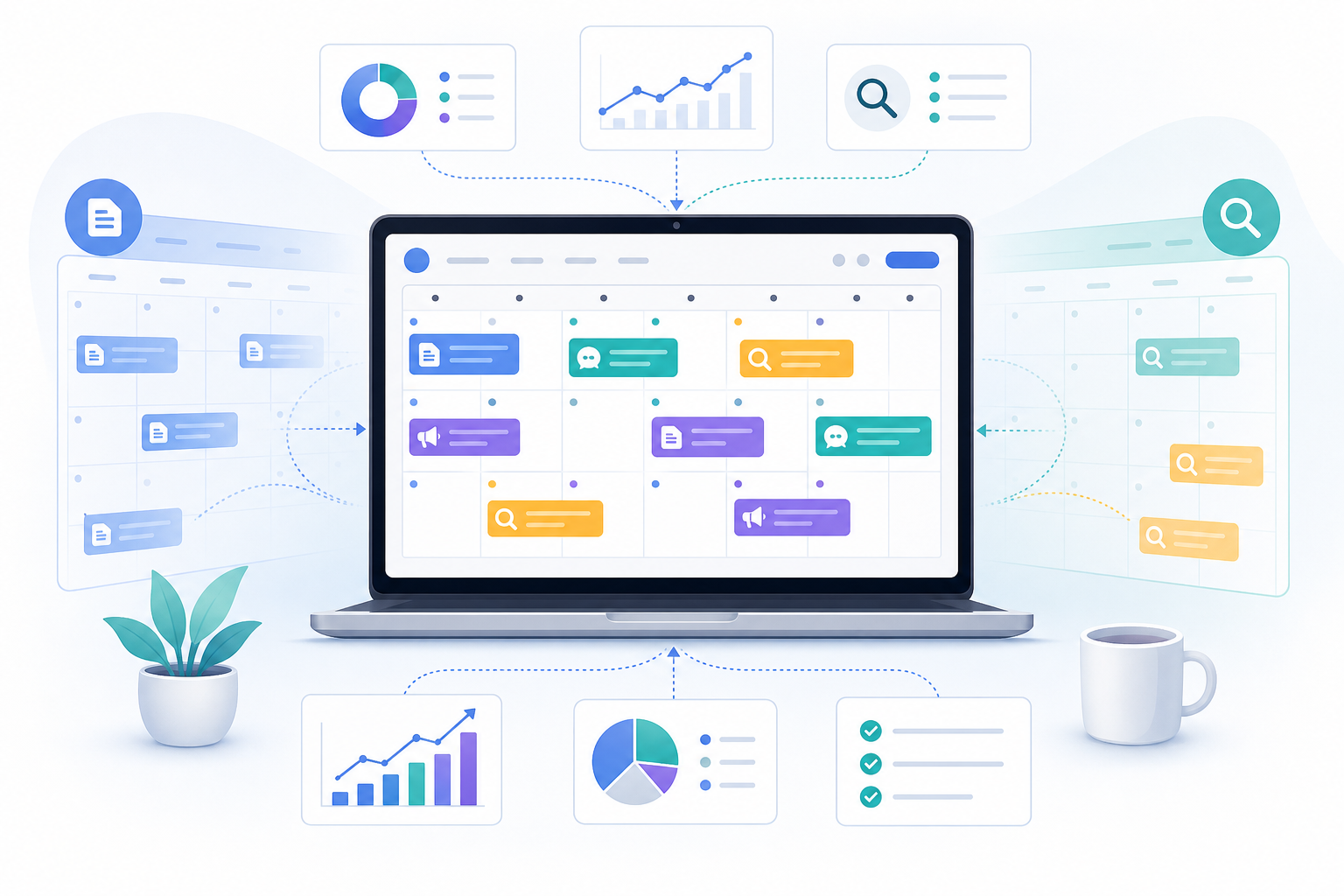
This is where many teams fail. They have a content calendar and a separate SEO task list. No one checks both together.
What works better is one calendar. Every content piece has a target keyword (or group), a clear goal, and a role in your site. That last part is important. If you write five blog posts about the same keyword, you compete with yourself.
A good calendar includes:
- The topic and working title
- Main keyword and search volume
- Content format (blog, landing page, video, etc.)
- Internal links it should have — and pages that should link to it
- Who writes it, when it publishes, and when it gets reviewed
I worked with a small business that went from random blog posts twice a week to a planned 12-week schedule tied to SEO. Their organic traffic grew about 40% in three months. Not because they wrote more — they wrote the right things. There’s a 12-week SEO content planning guide that shows how to do this.
On-Page SEO Isn’t an Afterthought
Here’s the truth: some teams write the whole article first, then give it to SEO to “optimize.” That’s backwards. On-page SEO should be part of the brief before writing starts.
Your content brief should say:
- The target keyword and where it should appear naturally (title, H1, first 100 words, some subheadings)
- Related terms to include — not stuffed, just there
- The questions the piece must answer (check People Also Ask on Google)
- Suggested internal links
Then the writer does their job. They bring the skill, voice, and story. The brief makes sure they write something that can rank.
Don’t skip the technical basics. Your page must load fast, work on phones, and have clean URLs. Building SEO-friendly web pages helps with this and pays off for every piece you publish.
Measure What Matters, Then Adjust
This is where integrated planning really helps. When content and SEO are planned together, you can track results back to your choices.
Did that blog post rank for its keyword in 90 days? Is it driving traffic? Are people clicking to your service pages? If not, you know what to fix — the keyword, the content, or the links.
Compare that to the old way, where content goes up and no one checks if it worked. I’ve seen sites with 200+ blog posts where less than 20 got any traffic. That wastes a lot of work.
Tools like Google Search Console and GA4 give you most of what you need. Moz’s beginner SEO guide is a great free resource to learn how to read and use that data. If you want to know how search engines are changing — especially with AI answers — check out answer engine optimization.
The Part Nobody Talks About: Internal Buy-In
The hardest part of integrated content and SEO planning isn’t the strategy. It’s getting everyone to agree inside the company. Writers sometimes feel SEO rules kill creativity. SEO people feel writers ignore them. Managers want results fast.
What works is to involve both sides early. Let the SEO person share keyword chances. Then let the content team make those topics interesting. When writers know why a keyword matters — that real people search for it — they get excited, not annoyed.
According to HubSpot’s State of Marketing report, companies that link content and SEO work do better than those who keep them separate. That matches what I’ve seen.
FAQ
Do I really need to combine content and SEO planning? Can’t I do them separately?
You can, but you will waste time making content no one searches for. Or you’ll target keywords with content that doesn’t fit. Combining them isn’t extra work — it cuts wasted effort.
What if I don’t have a dedicated SEO person?
You don’t need one. Learn basic keyword research, use free tools like Google Search Console and Ubersuggest, and make sure every content piece targets a real search. That puts you ahead of most.
How far ahead should I plan my content?
I like 8-12 weeks. It’s far enough to be smart but close enough to stay flexible. Planning six months ahead sounds good until your industry changes and half your calendar is useless.
What’s the biggest mistake people make with integrated planning?
They treat it as a one-time project instead of a regular process. Keywords change. Competitors add content. Google updates its rules. You need to check and adjust often — at least once a month.
Should every blog post target a keyword?
Almost all should. Exceptions are thought leadership or company news. But if no one searches for a post, ask why you’re writing it. Maybe another channel is better.
How long before I see results?
Usually 3-6 months for traffic to grow. SEO is slow. But good content keeps bringing traffic for years.
Does this work for small businesses or just big companies?
Small businesses benefit more because they can’t waste content. If you post only four times a month, every post must count.
Wrapping Up
The main idea is simple: stop treating content and SEO as separate tasks. When you plan them together — one calendar, one goal, one conversation — everything works better. You write less useless content. You rank for keywords that matter. Over time, you build something that grows.
If you’re just starting, pick your next five content pieces and follow the steps I shared. Research keywords first, write briefs, then create content. See what happens. You might be surprised how much it helps. If you get stuck, check out the blog — there’s lots more to learn.