
The Complete Guide to SEO Optimization Services and Tools for Modern Businesses
You want your business to show up when people search online. But SEO can seem hard. There are many tools, service types, and advice to sort through.
This guide makes it simple. You will learn what SEO services include, which tools matter, and how to pick the right one for your business. Think of this as your main resource for smart SEO choices.
Whether you run a small local shop or a growing online brand, this page covers it all. Use the table of contents below to jump to the part you need most.
Table of Contents
- What Are SEO Optimization Services?
- Types of SEO Services You Should Know
- On-Page SEO: The Foundation
- Technical SEO: Behind the Scenes
- Off-Page SEO: Building Authority
- Local SEO: Reaching Nearby Customers
- Best Tools for SEO Optimization
- SEO as a Service: What to Expect
- How to Choose the Right SEO Service
- SEO vs. PPC: Which Fits Your Goals?
- Measuring Your SEO Results
- Common SEO Mistakes to Avoid
- Frequently Asked Questions
- Conclusion and Next Steps
What Are SEO Optimization Services?

SEO services help your website rank higher in search results. They do many tasks. These include keyword research, content creation, link building, and technical fixes.
The goal is clear. You want more of the right people to find your site. An SEO service does the work so you can run your business.
Most providers offer monthly plans. Some offer one-time audits or project work. The right choice depends on your budget, goals, and website health.
Types of SEO Services You Should Know
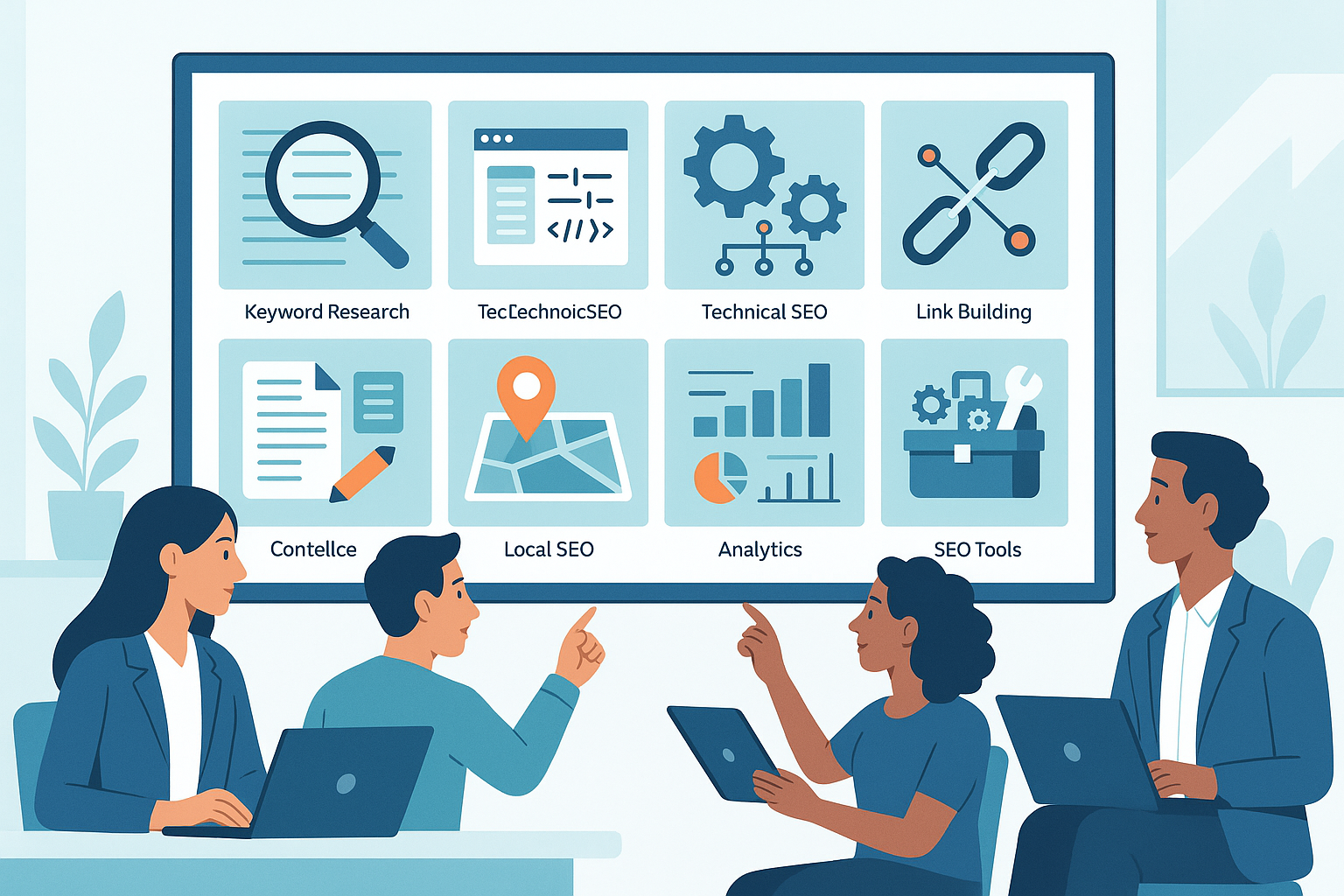
Not all SEO services are the same. Here are the main types you will see:
- On-page SEO — Improve content, titles, and page structure
- Technical SEO — Fix site speed, mobile issues, and crawl errors
- Off-page SEO — Build backlinks and online authority
- Local SEO — Rank in local search and Google Maps
- Content SEO — Create blog posts, guides, and landing pages
- E-commerce SEO — Improve product pages for online stores
Each type solves a different problem. Most businesses need a mix of these. Let’s look at each one more closely.
On-Page SEO: The Foundation of Every SEO Strategy
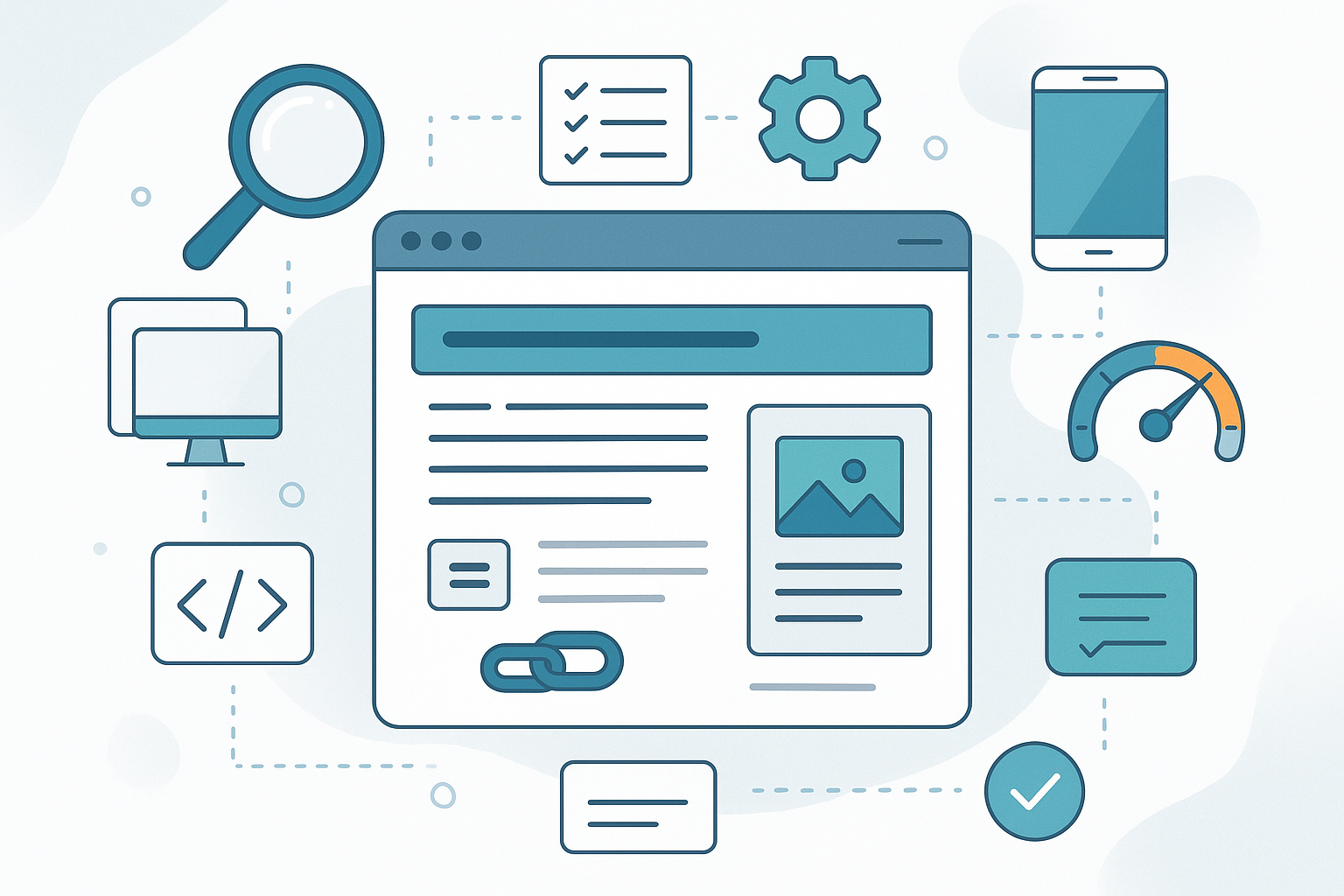
On-page SEO is what you do on your website. It is the first step for any SEO work. Without good on-page SEO, other tactics won’t work well.
Key On-Page SEO Tasks
- Keyword research — Find the words your audience searches for
- Title tags and meta descriptions — Write clear, keyword-rich page titles
- Header tags (H1, H2, H3) — Organize content so search engines understand it
- Internal linking — Connect related pages on your site
- Image alt text — Describe images for search engines and screen readers
- Content quality — Write helpful, original content that answers real questions
You can learn more about on-page basics in our on-page and technical SEO checklist. It shows each step with clear actions.
On-page SEO is something every business can start today. Many SEO tools make this process faster and easier.
Technical SEO: The Behind-the-Scenes Work
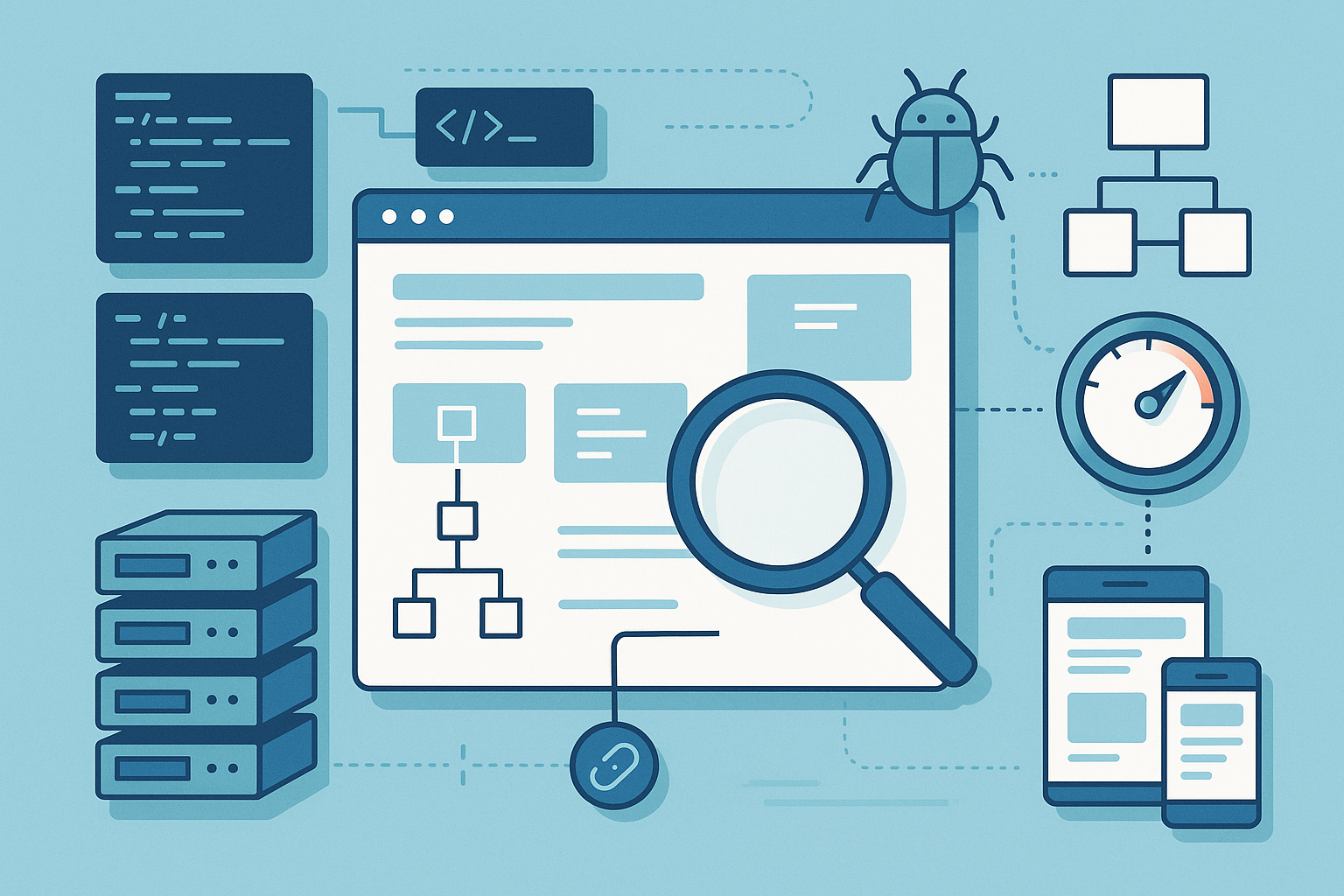
Technical SEO focuses on your website’s structure and speed. Search engines need to crawl and index your pages. If they can’t, your content won’t rank.
What Technical SEO Covers
- Site speed — Pages should load in under three seconds
- Mobile friendliness — Your site must work well on phones
- XML sitemaps — Help search engines find all your pages
- Robots.txt — Tell search engines which pages to crawl
- HTTPS security — Secure sites rank better than unsecured ones
- Structured data — Add schema markup for rich search results
- Core Web Vitals — Meet Google’s page experience standards
Technical SEO can seem hard. But many fixes are quick wins. Our guide on quick technical SEO fixes shows you where to start.
According to Google’s Core Web Vitals documentation, page experience now affects rankings. This makes technical SEO more important than ever.
Off-Page SEO: Building Authority and Trust
Off-page SEO happens outside your website. It mostly means building backlinks. These are links from other sites that point to yours.
Why Backlinks Matter
Search engines see backlinks as votes of confidence. The more quality links you have, the more trustworthy your site looks. But not all links are equal.
One link from a respected news site is better than 100 from low-quality directories. Focus on earning links, not buying them.
Off-Page SEO Tactics That Work
- Guest posting — Write articles for other websites in your niche
- Digital PR — Get mentioned in news stories and industry publications
- Social signals — Share content on social media to drive traffic
- Brand mentions — Build awareness so people talk about your business
- Content partnerships — Work with others to create shared resources
Off-page SEO takes time. But it builds lasting authority that others can’t copy easily.
Local SEO: Reaching Customers Near You
If you serve a certain area, local SEO is key. It helps you show up in “near me” searches and Google Maps.
Local SEO Essentials
- Google Business Profile — Claim and fill out your listing fully
- NAP consistency — Keep your Name, Address, and Phone the same everywhere
- Local citations — Get listed in local directories like Yelp and Yellow Pages
- Reviews — Ask happy customers to leave Google reviews
- Local content — Write about topics relevant to your area
For more on local SEO, check out our practical guide to local SEO. It covers setting up your profile and tracking rankings.
Best Tools for SEO Optimization
The right SEO tools save you time and show hidden chances. Here are popular options by what they do best.
All-in-One SEO Platforms
These tools do keyword research, rank tracking, site audits, and competitor checks.
- Ahrefs — Best for backlink analysis and keyword research. Plans start about $99/month.
- Semrush — Great for competitor research and content planning. Plans start about $130/month.
- Moz Pro — Easy to use with strong local SEO features. Plans start about $99/month.
Free SEO Tools
You don’t need a big budget to start. These free tools are strong:
- Google Search Console — See how Google views your site. Track clicks and fix errors.
- Google Analytics — Understand your traffic and user behavior.
- Google PageSpeed Insights — Test your site speed and get fix tips.
- Ubersuggest (free tier) — Basic keyword research and site audit features.
- Yoast SEO (WordPress plugin) — Guides you through on-page SEO for each post.
Keyword Research Tools
- Google Keyword Planner — Free tool inside Google Ads. Shows search volume data.
- AnswerThePublic — Find questions people ask about your topic.
- Keywords Everywhere — Browser extension that shows search data as you browse.
Technical SEO Tools
- Screaming Frog — Crawls your site to find broken links, missing tags, and errors.
- GTmetrix — Detailed page speed reports with clear fix tips.
- Schema Markup Validator — Check if your structured data is set up right.
Content Optimization Tools
- Surfer SEO — Compares your content to top pages. Gives real-time scores.
- Clearscope — Helps you cover all topics search engines expect.
- Grammarly — Finds grammar errors and improves readability.
According to Moz’s guide to SEO tools, the best SEO tool depends on your needs and budget. Start with free tools. Then upgrade as your traffic grows.
SEO as a Service: What to Expect When You Hire Help
Many businesses hire SEO services instead of doing it alone. This means a team handles your SEO work. Here is what that usually looks like.
What an SEO Service Usually Includes
- Initial audit — A full review of your website and rankings
- Strategy development — A custom plan based on your goals and competition
- Monthly reporting — Clear reports showing traffic, rankings, and progress
- Ongoing work — Content creation, link building, and technical fixes each month
- Keyword tracking — Watch how your keywords perform over time
Pricing Models for SEO Services
SEO prices vary a lot. Here are common types:
- Monthly retainer — $500 to $5,000+ per month. Most common for ongoing work.
- Project-based — $1,000 to $30,000+. Good for one-time audits or site launches.
- Hourly consulting — $75 to $300 per hour. Best for specific questions or training.
The right price depends on your market, competition, and goals. A local bakery needs different SEO than a national online store.
For more on SEO consulting, read our guide to SEO consulting services.
How to Choose the Right SEO Optimization Service
Picking the right SEO service can feel hard. There are many options. Use these tips to narrow your choices.
Questions to Ask Any SEO Provider
- What results have you done for similar businesses?
- How do you report progress and results?
- What SEO tools do you use?
- Do you follow Google’s rules? (Avoid anyone who doesn’t.)
- What does your contract say? Can I cancel if it’s not working?
- Who will do the actual work on my account?
Red Flags to Watch For
- Guaranteed rankings — No one can promise #1 spots. Google changes often.
- Secret methods — Good SEO is clear. Be careful if they won’t explain their process.
- Very low prices — Quality SEO takes real work. Prices under $300/month often mean cut corners.
- No reporting — You should always know what work is done and results.
- Buying links in bulk — This breaks Google’s rules and can hurt your site.
What Good SEO Providers Do Differently
The best providers treat SEO as a long-term partnership. They learn about your business. They set real goals. And they change their plan based on data.
They also keep up with changes. SEO changes all the time. Trends like answer engine optimization (AEO) change how search works. A good provider stays ahead.
SEO vs. PPC: Which Fits Your Goals?
Many businesses wonder if they should use SEO or pay-per-click (PPC) ads. The answer depends on your time and budget.
SEO Strengths
- Builds long-term, free traffic
- Creates lasting authority
- Grows over time — older content keeps ranking
- More trust from users (organic results get more clicks)
PPC Strengths
- Shows up right away
- Easy to test different messages
- Good for seasonal sales
- Full control over who sees ads
Most businesses do best with both. SEO builds your base. PPC fills gaps while you wait for SEO results. For more, read our post on PPC vs. SEO and which is right for your business.
Measuring Your SEO Results
SEO without checking results is guesswork. Track these numbers to see if your work pays off.
Key SEO Metrics to Watch
- Organic traffic — How many visitors come from search engines
- Keyword rankings — Where your keywords rank in search results
- Click-through rate (CTR) — What percent of people click your listing
- Bounce rate — How many visitors leave without action
- Conversion rate — How many visitors become leads or customers
- Backlink growth — How many new quality links you get over time
- Page load speed — How fast your pages load on phones and computers
How Often Should You Check?
Look at your SEO data at least once a month. Watch for trends, not daily changes. SEO takes time. Most businesses see real progress after three to six months of steady work.
Use Google Search Console and Google Analytics together. They give a full view of your search performance for free.
Common SEO Mistakes to Avoid
Even smart businesses make SEO mistakes. Here are common ones and how to fix them.
Mistake 1: Ignoring Mobile Users
More than half of web traffic comes from phones. If your site doesn’t work well on phones, you lose visitors and rankings. Test your site on mobile often.
Mistake 2: Stuffing Keywords
Using your keyword too much hurts more than helps. Write naturally. Use your keyword where it fits. Focus on being helpful, not repeating.
Mistake 3: Skipping Title Tags and Meta Descriptions
These are the first things people see in search results. Blank or plain titles get fewer clicks. Write unique, clear titles for every page.
Mistake 4: Publishing Thin Content
Short, shallow pages rarely rank well. Search engines want content that fully answers questions. Aim for depth and usefulness in every page you publish.
Mistake 5: Forgetting About User Experience
SEO is not just for search engines. It is for people. Slow pages, confusing menus, and hard-to-read text hurt your rankings. Make your site easy and nice to use.
Mistake 6: Not Building Links
Many businesses focus only on content and forget link building. Both matter. You need quality backlinks to compete for tough keywords.
Frequently Asked Questions About SEO Optimization Services
What does an SEO optimization service actually do?
An SEO service improves your website so it ranks higher in search results. This includes keyword research, content creation, technical fixes, and link building. The goal is to bring more free traffic to your site.
How much do SEO optimization services cost?
Costs vary a lot. Monthly plans usually run from $500 to $5,000 or more. One-time projects can cost $1,000 to $30,000. The price depends on your industry, competition, and work needed.
How long does SEO take to show results?
Most businesses see results in three to six months. Some competitive keywords take longer. SEO is a long-term plan. Quick wins exist, but lasting results need steady work over time.
Can I do SEO myself, or do I need a service?
You can do basic SEO yourself using free tools. Many small businesses start this way. But as your site grows, a service can save time and get better results. It depends on your skills, time, and budget.
What are the best tools for SEO optimization?
Popular paid tools include Ahrefs, Semrush, and Moz Pro. Free tools like Google Search Console, Google Analytics, and Yoast SEO are great to start. The best tool depends on what you need — keyword research, site audits, or rank tracking.
What is the difference between SEO and PPC?
SEO brings free, organic traffic over time. PPC gives you instant visibility with paid ads. SEO builds lasting value. PPC stops when you stop paying. Most businesses do best using both together.
How do I know if my SEO provider is doing a good job?
Look at your organic traffic, keyword rankings, and conversions. A good provider sends clear monthly reports. You should see steady improvement. If nothing changes after six months, ask tough questions or think about switching.
Conclusion: Your Next Steps with SEO
SEO services and tools are not luxuries. They are must-haves for any business that wants to grow online. The key is to match the right approach to your needs.
Here are the main points from this guide:
- SEO has many parts — on-page, technical, off-page, and local. Most businesses need all of them.
- Free tools like Google Search Console are great to start.
- When hiring SEO help, ask smart questions and watch for red flags.
- Track your results each month. Focus on trends, not daily changes.
- SEO is a long game. Steady work beats shortcuts every time.
Start with one area that needs the most work. Maybe fix technical issues. Maybe create better content. Pick one thing, do it well, and grow from there.
Want to keep learning? Explore our blog for more guides on SEO, content, and digital marketing. If you have questions or want help, don’t hesitate to reach out.