
How Content Marketing Solutions for Small Businesses Build Authority and Drive Leads
You know your business is great. But do your future customers know that? Getting found online is tough for small businesses. Big brands seem to own every search result.
The good news? Content marketing levels the playing field. With the right approach, you can attract leads and build trust. You don’t need a huge budget to make it work.
This guide walks you through practical content marketing solutions for small businesses. You’ll learn how to plan content, write blog posts, and tie it all to a content and SEO strategy that drives real results in 2026.
What Is Content Marketing and Why Does It Matter?

Content marketing means creating helpful content for your audience. Think blog posts, videos, emails, and social media. The goal is to attract people who need what you offer.
Here’s why it matters for small businesses:
- It builds trust. People buy from brands they trust. Helpful content earns that trust over time.
- It drives organic traffic. Good content ranks in search engines. That means free, ongoing traffic to your site.
- It generates leads. Visitors who find your content useful are more likely to become customers.
- It costs less than ads. A blog post can bring traffic for years. A paid ad stops the moment you stop paying.
According to, 70% of marketers actively invest in content marketing. Small businesses that do the same see strong returns.
Start With a Clear Content and SEO Strategy

Posting random blogs won’t get results. You need a plan. A solid content and SEO strategy ties your content to what people actually search for.
Step 1: Know Your Audience
Who are your ideal customers? What problems do they face? Write down three to five common questions they ask.
These questions become your content topics. Each piece of content should answer one question clearly.
Step 2: Do Keyword Research
Keywords are the words people type into Google. You want to find keywords that match your topics. Free tools like Google Keyword Planner can help.
Focus on long-tail keywords. These are longer, more specific phrases. They’re easier to rank for and attract better leads.
Step 3: Build a Content Calendar
Plan your content at least three months ahead. A calendar keeps you consistent. Consistency is key to building authority.
If you want a full roadmap, check out this guide on how to build a 12-month content plan for small business growth. It breaks the process into simple steps.
Blog Writing and Content Strategy That Works

Blogging is the backbone of content marketing. A strong blog writing and content strategy helps you rank higher and connect with readers.
Write for People First, Search Engines Second
Your content should be easy to read. Use short sentences. Break up text with headings and lists.
Google rewards content that helps people. If readers stay on your page, Google notices. That boosts your rankings.
Follow a Simple Blog Post Formula
Every blog post should follow this structure:
- Hook: Start with a question or bold statement. Grab attention fast.
- Problem: Describe the challenge your reader faces.
- Solution: Share clear, actionable steps they can take.
- Call to action: Tell them what to do next.
This formula works for almost any topic. It keeps your writing focused and useful.
Improve Each Post for Search Engine Optimization (SEO)
SEO helps your blog posts show up in search results. Here are the basics:
- Put your main keyword in the title, first paragraph, and a few headings.
- Write a meta description that makes people want to click.
- Use internal links to connect related pages on your site.
- Add alt text to every image.
- Keep your URL short and keyword-focused.
Want a deeper dive into SEO basics? This small business SEO checklist covers on-page and technical must-haves.
Types of Content That Build Authority
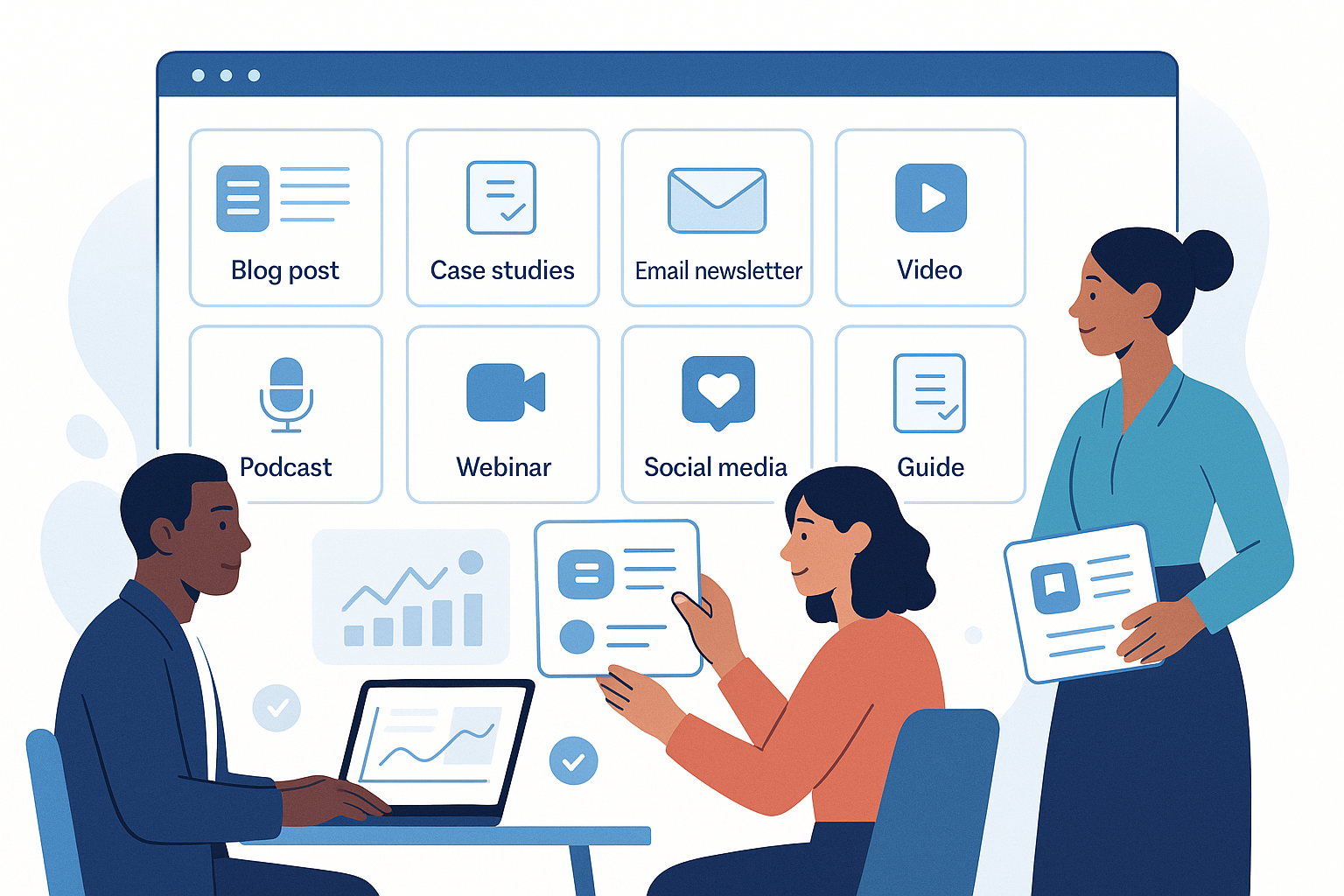
Blog posts are great. But they’re not the only option. Mix up your content to reach more people.
How-To Guides and Tutorials
Step-by-step guides show your expertise. They also rank well in search. People love content that solves a problem.
Case Studies and Success Stories
Share real results from real customers. This builds trust fast. Numbers and specifics make your stories stronger.
Video Content
Video is huge in 2026. Short videos can explain topics quickly. They also keep visitors on your site longer.
If you’re new to video, learn how to build a winning video marketing strategy. It’s a great way to stand out.
Email Newsletters
Email lets you stay in touch with leads. Share your latest blog posts and tips. It keeps your brand top of mind.
Social Media Posts
Repurpose your blog content for social media. Turn key points into short posts. Link back to your full articles.
How Content Marketing Drives Leads

Great content attracts visitors. But how do you turn them into leads? Here’s the process.
Create Lead Magnets
A lead magnet is something valuable you give away. It could be a checklist, template, or short guide. Visitors give you their email in exchange.
Examples of lead magnets:
- A free SEO audit checklist
- A content calendar template
- A short ebook on your area of expertise
Add Clear Calls to Action
Every page should guide the reader to a next step. That might be downloading a resource or signing up for a newsletter. Make the action clear and simple.
Nurture Leads With Email
Once someone joins your list, don’t go silent. Send helpful emails on a regular schedule. According to Litmus research, email marketing returns $36 for every $1 spent. That’s a strong return for any small business.
For more email tips, explore these strategies for effective email marketing campaigns.
Measuring Your Content Marketing Results
You need to track what’s working. Otherwise, you’re guessing. Here are the key metrics to watch.
- Organic traffic: How many visitors come from search engines?
- Time on page: Are people reading your content?
- Bounce rate: Are visitors leaving right away?
- Lead conversions: How many visitors become leads?
- Keyword rankings: Are your target keywords moving up?
Google Analytics and Google Search Console are free tools. They give you all this data. Check them at least once a month.
Common Content Marketing Mistakes to Avoid
Small businesses often make the same mistakes. Here’s what to watch out for.
- No strategy: Random posting wastes time. Plan your content around keywords and goals.
- Writing for yourself: Write for your audience. Answer their questions, not yours.
- Ignoring SEO: Great content that nobody finds is useless. Always improve your posts for search.
- Being inconsistent: One post a month won’t cut it. Aim for at least two to four posts monthly.
- Skipping promotion: Share every post on social media and email. Don’t just publish and hope.
Frequently Asked Questions
What are content marketing solutions for small businesses?
These are strategies and tools that help small businesses create helpful content. The content attracts visitors, builds trust, and turns readers into leads. Blog posts, videos, and email campaigns are common examples.
How much does content marketing cost for a small business?
Costs vary widely. You can start with just your time and free tools. Many small businesses spend $500 to $2,000 per month. The key is to start small and scale up as you see results.
How long does it take to see results from content marketing?
Most businesses see early results in three to six months. SEO-driven content builds momentum over time. The longer you stay consistent, the stronger your results become.
What’s the difference between content marketing and SEO?
Content marketing is about creating valuable content. SEO is about making that content easy to find in search engines. They work best together as a combined content and SEO strategy.
How often should a small business publish blog posts?
Aim for two to four posts per month. Quality matters more than quantity. One great post beats five weak ones every time.
Can I do content marketing myself or should I get help?
You can absolutely start on your own. Many small business owners write their own blogs. As you grow, you might bring in help for blog writing and content strategy to save time.
What types of content work best for lead generation?
How-to guides, checklists, and case studies perform well. Pair them with lead magnets like free downloads. Email newsletters are also great for nurturing leads over time.
Wrapping Up: Your Next Steps
Content marketing is one of the best ways to grow a small business in 2026. It builds authority, drives traffic, and generates leads. And it doesn’t require a massive budget.
Here’s a quick recap of what to do:
- Define your audience and their top questions.
- Build a content and SEO strategy around those questions.
- Create a content calendar and stick to it.
- Write helpful blog posts that follow SEO best practices.
- Promote your content through email and social media.
- Track your results and adjust as needed.
Start with one blog post this week. Answer a question your customers ask all the time. That single post could be the start of something big.
If you want more ideas, explore the guide to developing a content strategy. It’s packed with practical tips you can use right away.