
Video Storytelling Techniques for Small Businesses: A Trust-Building Framework
Your customers see hundreds of ads every day. Most of them all look the same. But a good story? That sticks.
Video storytelling is one of the best ways to stand out. It helps small businesses build real trust with their audience. You don’t need a big budget or fancy gear to do it well.
This guide gives you a clear plan. You’ll learn video storytelling tips for small businesses that you can start using this week. Let’s dive in.
Why Video Storytelling Matters in 2026

People remember stories 22 times more than plain facts. That is a big advantage for your brand. Video makes stories even stronger because it adds feeling with pictures and sound.
According to Wyzowl’s 2026 Video Marketing Report, 91% of businesses now use video to market. That number grows every year. Small businesses that skip video risk falling behind.
Here is what video storytelling does for your brand:
- Builds emotional connections with your audience
- Makes your brand feel real and human
- Boosts engagement on social media platforms
- Helps people remember your message longer
- Drives more traffic to your website
If you are already thinking about your bigger plan, check out this guide on how to build a winning video marketing strategy. It works well with the plan below.
The 5-Part Video Storytelling Framework

Great stories follow a pattern. This plan breaks video storytelling into five simple steps. Use it for any video you make.
1. Start With Your Audience’s Problem
Every good story starts with a problem. Your viewer needs to think, “That’s me!” in the first few seconds.
Ask yourself these questions before you film:
- What keeps my ideal customer awake at night?
- What problem do they face every day?
- What goal are they trying to reach?
For example, a local bakery might start a video with: “Tired of store-bought cakes that taste like cardboard?” That is simple. It is easy to relate to. It hooks the viewer right away.
2. Introduce a Relatable Character
Your character could be you, a team member, or a customer. The key is that viewers see themselves in that person.
Small businesses have a big advantage here. You are not a faceless company. Show the real people behind your brand. That builds trust.
Try showing a customer who had the same problem your audience faces. Let them tell their own story in their own words. Real voices always win over scripted speeches.
3. Show the Journey, Not Just the Result
Don’t jump straight to the happy ending. Show the hard parts. People connect with struggle and effort.
A fitness studio might show a member’s first awkward class. Then show them three months later, stronger and more confident. The change tells a strong story without a sales pitch.
This works because it is honest. Viewers trust brands that show the full story.
4. Deliver a Clear Message
Every video needs one main point. Just one. If you try to say everything, your audience remembers nothing.
Write your main message in one sentence before you start filming. Here are some examples:
- “We treat every pet like family.”
- “Fresh ingredients make all the difference.”
- “Your home project is in good hands.”
Build your whole video around that one idea. This keeps your story focused and easy to remember.
5. End With a Gentle Next Step
Your ending should invite, not push. Tell viewers what they can do next. Keep it simple and low-pressure.
Good examples include:
- “Visit our website to learn more.”
- “Follow us for weekly tips.”
- “Drop a comment with your story.”
This soft approach builds trust over time. It turns viewers into fans before they become customers.
Video Production Tips for Small Business Marketing

You don’t need a Hollywood budget. Video production for small business marketing is easier than you think. Here are simple tips to get started.
Keep It Short and Focused
Aim for 60 to 90 seconds for social media videos. You can go up to 3 minutes for website or YouTube videos. Shorter videos get watched more.
Use Natural Light
Film near a window during the day. Natural light looks better than most cheap lights. It also makes your video feel warm and real.
Invest in Good Audio
Bad audio ruins a video faster than bad pictures. A simple clip-on microphone costs about $20. It makes a big difference in quality.
Film With Your Phone
Most smartphones in 2026 shoot in 4K. That is more than enough for great video. Hold your phone sideways for a wider frame. Use a cheap tripod to keep it steady.
According to HubSpot’s marketing blog, short videos have the highest return on investment (ROI) of any content type. You don’t need to worry about perfect production.
Where to Share Your Story Videos

Making a great video is only half the job. You also need to put it where your audience will see it. Social media marketing services often focus on these key platforms:
- Instagram Reels: Great for short, punchy stories under 90 seconds
- YouTube: Best for longer stories and tutorials
- Facebook: Still strong for local businesses and community engagement
- TikTok: Perfect for behind-the-scenes and raw, real clips
- LinkedIn: Ideal for B2B storytelling and thought leadership
Each platform has its own style. A TikTok video feels different from a LinkedIn post. Match your tone to the platform. For more on this, explore how social media marketing helps build brands.
Types of Story Videos That Build Trust
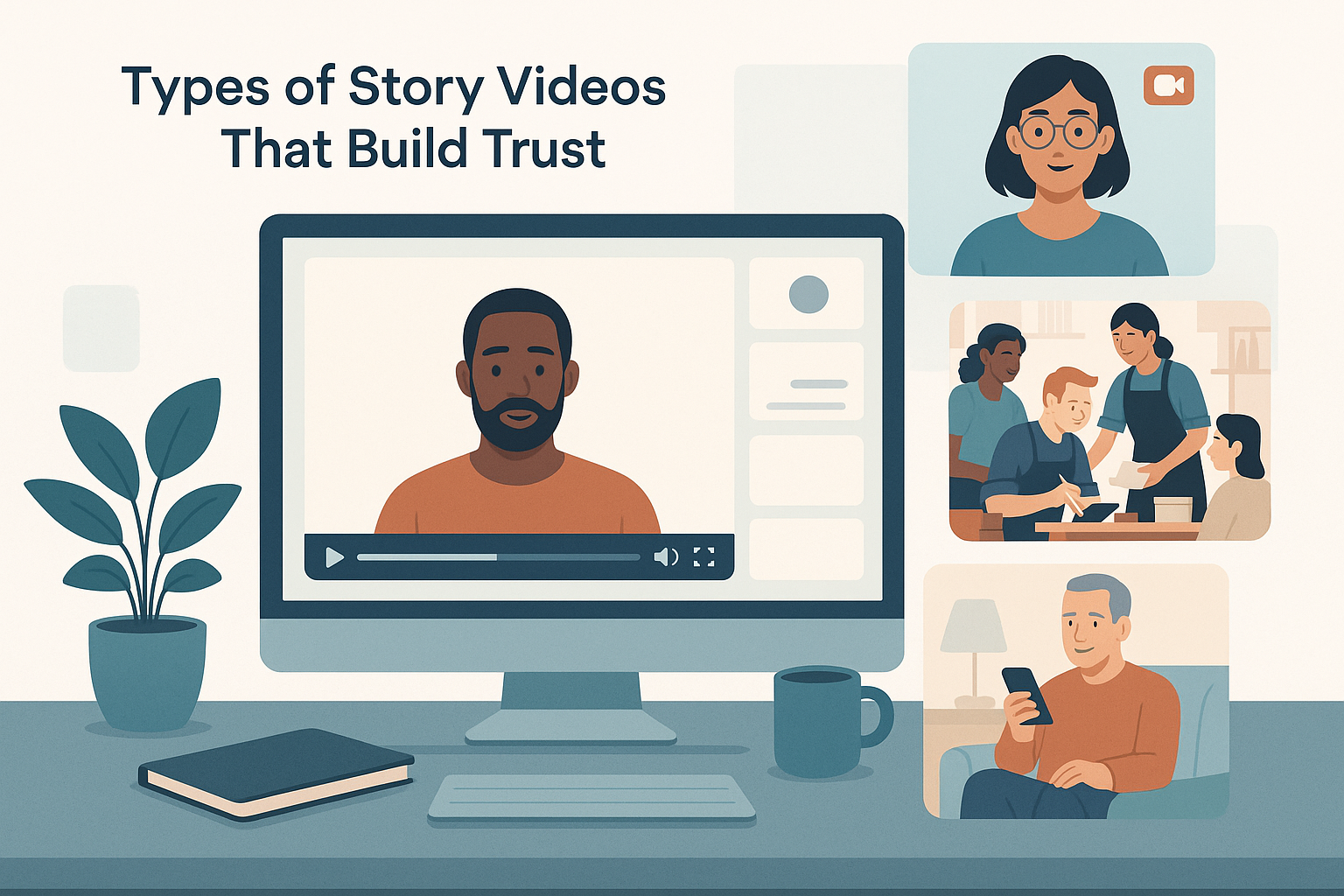
Not sure what to film? Here are five proven video types that work well for small businesses.
Customer Testimonial Videos
Let happy customers share their experience. Keep it casual and unscripted. Real reactions beat polished scripts every time.
Behind-the-Scenes Videos
Show how you make your product or deliver your service. People love seeing the process. It builds confidence in your quality.
Founder Story Videos
Share why you started your business. Talk about the problem you wanted to solve. This creates a personal bond with your audience.
Day-in-the-Life Videos
Follow a team member through their workday. This shows your company culture. It also makes your brand feel friendly.
How-To and Tip Videos
Teach your audience something useful. A plumber could show how to fix a leaky faucet. A florist could share flower care tips. Helpful content earns trust fast.
Building a strong brand goes hand in hand with storytelling. Learn more about the key parts of strong brand identity to make your videos even better.
Measuring Your Video Storytelling Success
You need to track what works. Here are the key numbers to watch:
- View count: How many people watched your video
- Watch time: How long people stayed before leaving
- Engagement rate: Likes, comments, and shares combined
- Click-through rate: How many viewers took the next step
- Conversion rate: How many viewers became leads or customers
Watch time matters most. A video with fewer views but high watch time often does better than a viral clip nobody finishes. Focus on keeping people interested from start to end.
Common Mistakes to Avoid
Even great storytellers make mistakes. Watch out for these common traps:
- Being too salesy: Stories sell without selling. Let the story do the work.
- Trying to be perfect: Polished videos can feel cold. Realness beats perfection.
- Skipping the hook: You have 3 seconds to grab attention. Start strong.
- No clear message: If you can’t sum up your video in one sentence, make it simpler.
- Ignoring captions: About 85% of social media videos are watched on mute. Always add text or captions.
How to Plan Your First Story Video
Ready to start? Follow these steps:
- Pick one customer problem to talk about
- Choose your character (you, a team member, or a customer)
- Write your one-sentence main message
- Plan 3 to 5 scenes that tell the story
- Film with your phone in good light
- Edit using a free app like CapCut or iMovie
- Add captions and your logo
- Post on your strongest social media platform first
Start with one video. See how it does. Then make another. Being consistent beats being perfect every time.
If you want to add video to a bigger marketing plan, this guide on building a 12-month content plan for small business growth is a great next step.
Frequently Asked Questions
How much does video production for small business marketing cost?
It depends on your plan. You can make good videos with just a smartphone for almost free. Professional video marketing services usually cost $500 to $5,000 per video. Start simple and spend more as you get results.
What are the best video storytelling techniques for small businesses on a tight budget?
Use your phone, natural light, and a $20 microphone. Focus on customer stories and behind-the-scenes videos. These types are cheap to make and very engaging. Being real matters more than fancy production.
How long should my story videos be?
For social media, aim for 60 to 90 seconds. YouTube videos can be 2 to 5 minutes. Always put the most important content first. If viewers aren’t hooked in the first 3 seconds, they will scroll past.
Do I need to hire a professional video team?
Not at first. Many good small business videos are made by the owners. As your brand grows, you might try video marketing services for bigger projects. But your first videos should be simple and real.
How often should I post story videos?
Aim for at least one video per week. Being consistent matters more than posting a lot. Pick a schedule you can keep. Even two videos a month can make a big difference over time.
Which social media platform is best for video storytelling?
It depends on your audience. Instagram and TikTok work well for consumer brands. LinkedIn is better for B2B businesses. Start where your customers already spend time.
How do I measure if my video storytelling is working?
Track watch time, engagement rate, and click-through rate. Watch time shows if your story holds attention. Engagement shows if people care enough to react. Click-throughs show if they want to learn more about your brand.
Wrapping It Up
Video storytelling for small businesses does not have to be hard. Start with your customer’s problem. Tell a real, human story. Keep it short, honest, and focused on one clear message.
You already have everything you need to start. Your phone, your story, and your passion for what you do. That is more powerful than any expensive production.
Take the first step today. Film one short video using the plan above. Share it with your audience and see what happens. You might be surprised how much a simple story can grow your brand. For more tips and guides, explore our blog for helpful resources on marketing, branding, and growing your business.