
How to Align Content and SEO Strategy for Maximum Impact
You write blog posts. You do keyword research. But somehow, the two never seem to work together. Sound familiar?
Many small business owners treat content and SEO as separate tasks. One person writes the blog. Another person handles the keywords. The result? Content that doesn’t rank. Or pages that rank but don’t connect with readers.
This guide shows you how to build a unified content and SEO strategy. You’ll learn practical steps you can start using today. No jargon. No fluff. Just a clear path to better results.
Why Content and SEO Strategy Must Work Together

Search Engine Optimization (SEO) helps people find your website. Content gives them a reason to stay. Neither works well alone.
Think of it this way. SEO without good content is like a store with a great sign but empty shelves. Content without SEO is like a great store hidden in an alley. You need both to grow.
According to HubSpot’s marketing research, businesses that blog regularly get 55% more website visitors. But only if those posts are built around what people actually search for.
The Core Problem: Working in Silos

Most small businesses create content in one of two ways. They either write about what they feel like sharing. Or they stuff keywords into pages without thinking about the reader.
Both approaches fail. The first ignores search demand. The second ignores the human on the other side of the screen.
A strong content and SEO strategy bridges this gap. It starts with what your audience searches for. Then it delivers real value on that topic.
Step 1: Know Your Audience Before You Write

Before you touch a keyboard, get clear on who you’re writing for. This is the foundation of any content strategy for small business success.
Ask These Questions First
- What problems does my ideal customer face?
- What words do they use to describe those problems?
- Where are they in the buying journey?
- What type of content do they prefer (video, blog, guide)?
Write down the answers. Keep them visible when you plan content. Every piece you create should speak to a real need.
Step 2: Do Keyword Research with Purpose

Keyword research is not about finding the most popular term. It’s about finding the right term for your audience and your goals.
Focus on Intent, Not Just Volume
Every search has an intent behind it. Someone typing “what is content marketing” wants to learn. Someone typing “content marketing services near me” wants to buy.
Match your content to the intent. Informational searches need guides and how-to posts. Commercial searches need service pages and case studies.
Use a Simple Keyword Framework
- Pick one primary keyword per page (like “content and SEO strategy”).
- Choose two to four related keywords (like “blog writing and content strategy”).
- Check the search volume and difficulty using free tools like Google Keyword Planner.
- Map each keyword to a specific page or blog post.
This keeps your site organized. It also prevents you from competing with yourself across multiple pages.
Step 3: Build a Content Plan Around Topic Clusters
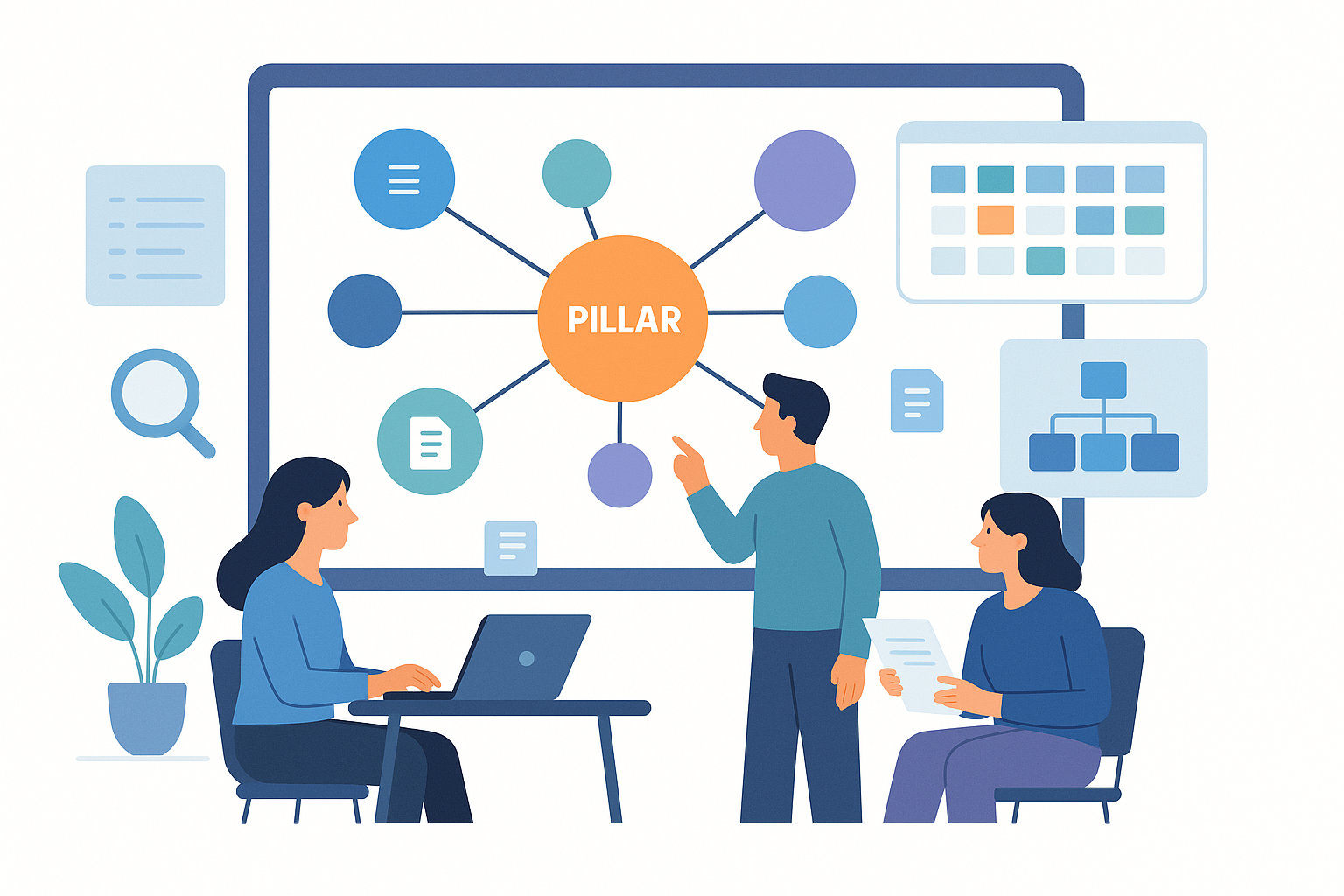
Topic clusters are a modern way to organize your website content. They help search engines understand your expertise on a subject.
How Topic Clusters Work
You start with one main topic (your pillar page). Then you create related articles that link back to it. Each article covers a specific angle of the main topic.
For example, your pillar page might cover content marketing services broadly. Then cluster articles dive into subtopics like blog writing, email content, or video marketing.
This structure builds topical authority. Search engines see that you cover a subject deeply. That helps all your related pages rank better.
Map Your Cluster Before You Write
- Choose your pillar topic (broad, high-volume keyword).
- List five to ten subtopics that support it.
- Assign one keyword to each subtopic.
- Plan internal links between all cluster pages.
This simple map saves you hours of guesswork later.
Step 4: Write Content That Serves Both Readers and Search Engines
Good content does two things at once. It answers the reader’s question clearly. It also signals relevance to search engines.
On-Page SEO Basics for Every Post
- Put your primary keyword in the title, first paragraph, and one H2 heading.
- Use related keywords naturally throughout the text.
- Write a meta description that makes people want to click.
- Add alt text to every image.
- Keep URLs short and keyword-focused.
You can learn more about these basics in this on-page and technical SEO checklist.
Make Your Content Easy to Read
Use short sentences. Break up long paragraphs. Add headers, bullet points, and white space.
People scan before they read. If your page looks like a wall of text, they’ll leave. That hurts your bounce rate and your rankings.
Step 5: Set Up a Publishing Schedule You Can Keep
Consistency matters more than volume. One great post per week beats five rushed ones.
A Simple Publishing Framework
- Week 1: Research keywords and outline the post.
- Week 2: Write the first draft.
- Week 3: Edit, add links, and improve for SEO.
- Week 4: Publish and promote.
If you need help building a full calendar, check out this guide on how to build a 12-month content plan for small business growth.
The key is to pick a pace you can maintain. Then stick with it for at least six months before judging results.
Step 6: Measure What Matters
You can’t improve what you don’t track. But you also don’t need to track everything.
Focus on These Metrics
- Organic traffic: How many people find you through search?
- Keyword rankings: Are your target terms moving up?
- Time on page: Are readers actually reading your content?
- Conversions: Are visitors taking the next step (signing up, contacting you)?
Use Google Search Console and Google Analytics. Both are free. Both give you enough data to make smart decisions.
According to Moz’s SEO guide, tracking rankings over time is one of the best ways to see if your strategy is working.
Step 7: Update and Refresh Old Content
Your content and SEO strategy doesn’t stop after you hit publish. Old posts can lose rankings over time. Refreshing them brings them back to life.
What to Update
- Add new data or examples.
- Fix broken links.
- Improve headings and meta descriptions.
- Add internal links to newer posts.
Set a reminder to review your top posts every few months. A small update can lead to a big jump in traffic.
Common Mistakes to Avoid
Even smart marketers make these errors. Watch out for them as you build your marketing content services plan.
- Writing for search engines only. If your content sounds robotic, readers won’t trust you.
- Ignoring search intent. A how-to guide won’t rank for a buying keyword.
- Skipping internal links. Links between your pages help search engines and readers navigate your site.
- Publishing without promoting. Share every post on social media and email.
- Giving up too soon. SEO takes time. Most pages need three to six months to reach their full potential.
Frequently Asked Questions
What is a content and SEO strategy?
It’s a plan that combines what you write with how you make it findable. You research what your audience searches for. Then you create content that answers those searches and follows SEO best practices.
How is blog writing and content strategy different from just blogging?
Blogging without a strategy means writing random topics. Blog writing and content strategy means every post has a purpose. Each post targets a keyword, serves an audience need, and links to related content on your site.
How long does it take to see results from a content and SEO strategy?
Most businesses see meaningful results in three to six months. Some competitive keywords take longer. Consistency is the biggest factor in how fast you grow.
Do I need to hire someone for marketing content services?
Not always. Many small business owners handle content themselves. But if you lack time or writing skills, working with a content marketing partner can speed things up.
How often should I publish new content?
Quality beats quantity every time. One well-researched post per week is a great starting point. You can always increase your pace as you build a system.
What tools do I need to get started?
Start with free tools. Google Search Console shows your search performance. Google Keyword Planner helps with keyword research. A simple spreadsheet tracks your content calendar.
Can I use the same content and SEO strategy for different channels?
Your core strategy stays the same across channels. But each channel needs its own format. A blog post works differently than an email or a social media post. Adapt the format while keeping the message consistent.
Bringing It All Together
A strong content and SEO strategy isn’t complicated. It just takes planning, patience, and a focus on your reader.
Here’s what to remember:
- Start with your audience’s needs and search behavior.
- Build topic clusters to show search engines your expertise.
- Write content that’s easy to read and useful to real people.
- Track your results and update your content over time.
Pick one step from this guide and do it this week. Even small actions add up over time. If you want to go deeper, explore more resources on the blog or reach out for guidance when you’re ready.