
How to Align Content and SEO Strategy for Long-Term Growth
You write blog posts. You tweak your website. You even try paid ads. But nothing seems to click. Sound familiar?
The problem often comes down to one thing. Your content and SEO strategy are not working together. When these two pieces are out of sync, you waste time and money.
This guide walks you through how to align them. You will learn simple steps to build a plan that drives traffic, leads, and sales over time. Whether you run a small business or manage a marketing team, this advice applies to you.
Why Content and SEO Strategy Must Work Together
Content without SEO is like a billboard in the desert. Nobody sees it. SEO without content is an empty promise to search engines.
Search Engine Optimization (SEO) helps people find your website. Content gives them a reason to stay. You need both to grow.
Here is what happens when they align:
- Your pages rank higher on Google
- You attract the right visitors to your site
- Visitors trust you and become customers
- Your results compound over months and years
According to HubSpot’s marketing research, companies that blog regularly get 67% more leads. But only if those blogs target the right keywords and topics.
Step 1: Define Your Goals First

Before you write a single word, get clear on what you want. Goals shape everything else in your content and SEO strategy.
Common Goals for Small Businesses
- Drive more organic traffic to your website
- Generate leads through contact forms or calls
- Build brand awareness in your local market
- Rank for specific products or services
- Reduce spending on paid ads over time
Pick one or two main goals. Write them down. Every piece of content you create should tie back to these goals.
Step 2: Know Your Audience Inside and Out

You cannot create good content for everyone. You need to know exactly who you are talking to.
Build a Simple Audience Profile
Answer these questions about your ideal customer:
- What problems do they face daily?
- What questions do they type into Google?
- What words do they use to describe their needs?
- Where do they spend time online?
- What makes them trust a business?
Talk to your current customers. Read online reviews. Check forums and social media groups. The language they use becomes your keyword list.
Step 3: Do Keyword Research That Matters

Keyword research is the bridge between content and SEO. It tells you what people search for and how to meet them there.
Focus on These Keyword Types
- Informational keywords: “How to fix a leaky faucet” — people want answers
- Commercial keywords: “Best plumber near me” — people compare options
- Transactional keywords: “Hire a plumber today” — people are ready to buy
You need content for each type. Blog posts cover informational keywords. Service pages target commercial and transactional ones.
Free Tools to Get Started
- Google Keyword Planner
- Google Search Console
- Ubersuggest
- AnswerThePublic
Look for keywords with decent search volume and low competition. Long-tail keywords (three or more words) often work best for small businesses. For a deeper look at how search engine optimization consulting services can guide this process, check out our guide to SEO consulting.
Step 4: Map Keywords to Content Types
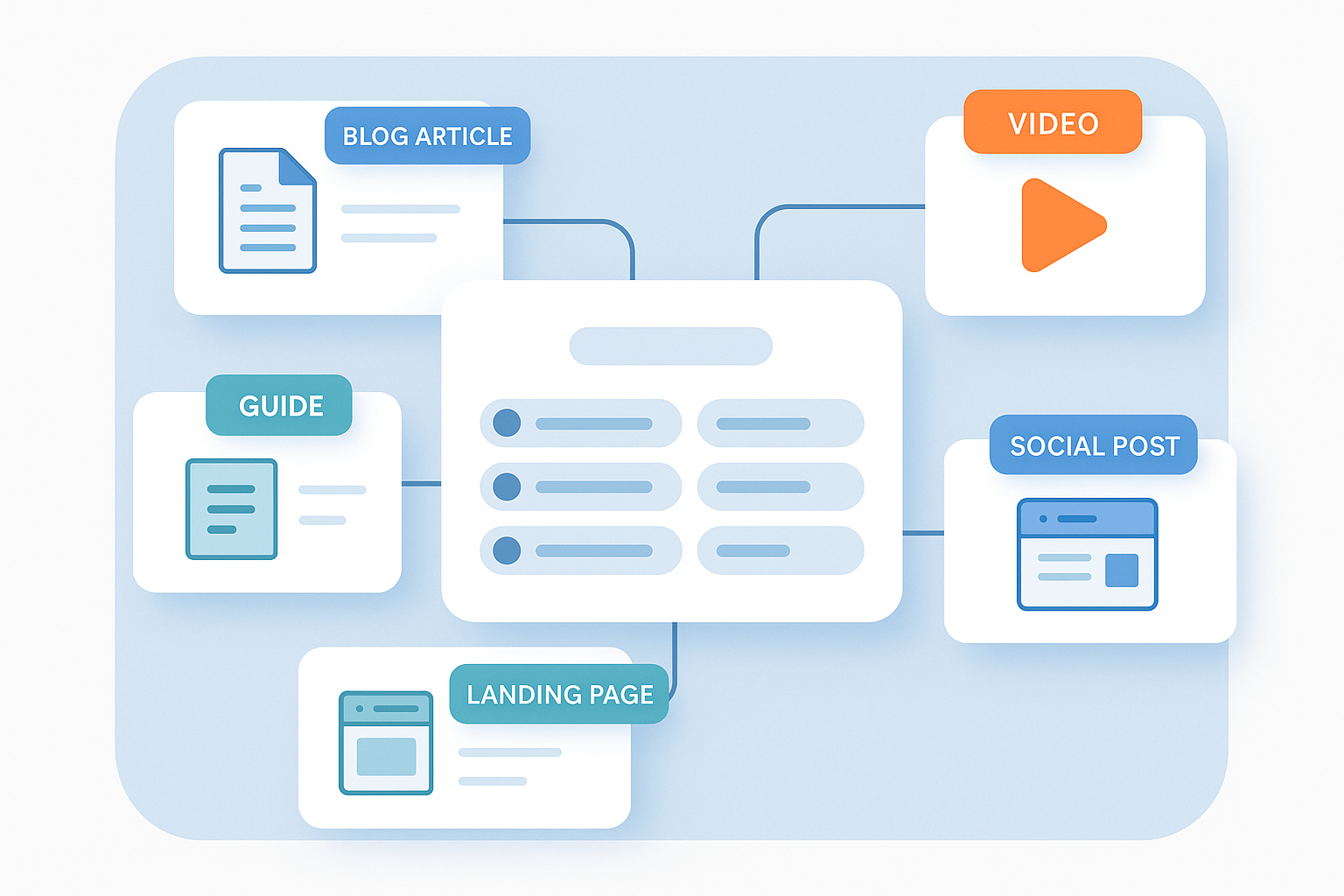
Every keyword needs a home. This is called content mapping. It keeps your site organized and avoids duplicate effort.
A Simple Content Map
Create a spreadsheet with these columns:
- Target keyword
- Search intent (informational, commercial, transactional)
- Content type (blog post, service page, FAQ)
- Status (planned, drafted, published)
- URL once published
This map becomes your content calendar. It shows gaps and keeps your team on track. If you want a full plan, read our post on how to build a 12-month content plan.
Step 5: Create Content That Ranks and Converts
Good content does two things. It answers the reader’s question. It moves them closer to doing business with you.
Blog Writing and Content Strategy Tips
- Start with a clear headline that includes your keyword
- Answer the main question in the first 100 words
- Use short paragraphs and bullet points
- Add images, charts, or videos to break up text
- Include a clear next step at the end
On-Page SEO Basics
Every page needs these elements:
- Title tag: 50 to 60 characters with your keyword
- Meta description: 145 to 155 characters that invite clicks
- H1 tag: One per page, matching the topic
- H2 and H3 tags: Break content into clear sections
- Internal links: Connect related pages on your site
- Alt text: Describe images for search engines
These basics matter more than any fancy trick. Get them right on every page you publish.
Step 6: Balance Organic and Paid Search
SEO takes time. Marketing paid search gives you quick results. The smartest businesses use both.
How Paid Search Supports Your SEO
- Test keywords with ads before writing content
- Drive traffic to new pages while they build rankings
- Capture leads for high-value terms you cannot rank for yet
- Gather data on what headlines and offers convert best
Think of paid search as a short-term boost. SEO is your long-term engine. Together, they cover all your bases. You can learn more about balancing these approaches in our post on PPC vs. SEO.
Step 7: Build a Content Calendar
Random posting does not work. You need a schedule that keeps you consistent.
What to Include in Your Calendar
- One blog post per week (at minimum, two per month)
- Monthly updates to your top service pages
- Quarterly reviews of your keyword targets
- Seasonal content tied to your industry
Stick to the calendar for at least six months. That is how long it takes to see real SEO results. Consistency beats perfection every time.
Step 8: Track What Works and Adjust
You cannot improve what you do not measure. Set up tracking from day one.
Key Metrics to Watch
- Organic traffic: How many visitors come from search
- Keyword rankings: Where your pages show up in results
- Bounce rate: How quickly people leave your page
- Time on page: How long visitors read your content
- Conversions: How many visitors take action
Use Google Analytics and Google Search Console. Both are free. Review your numbers monthly and adjust your plan based on what you find.
According to Moz’s beginner guide to SEO, tracking and adjusting is what separates good SEO from great SEO.
Step 9: Refresh Old Content Regularly
Your best content does not stay fresh forever. Search engines reward updated pages.
When to Refresh a Page
- Traffic has dropped over the past three months
- Rankings have slipped for your target keyword
- The information is outdated or incomplete
- A competitor now outranks you for the same term
How to Refresh Content
- Update facts, stats, and examples
- Add new sections that cover related questions
- Improve the headline and meta description
- Add internal links to newer content
- Re-share on social media after updating
A content refresh can boost rankings faster than writing a brand-new post. Make it part of your routine.
Step 10: Get Help When You Need It
You do not have to do everything alone. Digital marketing consulting services exist for a reason. They help you skip mistakes and move faster.
Signs You Might Need Outside Help
- You have been blogging for months with no traffic growth
- Your website has technical issues you cannot fix
- You do not have time to write quality content
- Your competitors keep outranking you
- You want to scale but do not know where to start
A good consultant will audit your site, find gaps, and give you a clear plan. They should also teach you along the way. For a full SEO checklist you can start with on your own, visit our small business SEO checklist.
Common Mistakes to Avoid
Even smart marketers make these errors. Watch out for them.
- Writing for search engines, not people: Google rewards helpful content. Write for humans first.
- Ignoring search intent: A blog post will not rank for a buying keyword. Match the content to the intent.
- Skipping internal links: Links between your pages help Google understand your site. Use them often.
- Chasing trends over basics: Fancy tactics fail without strong foundations. Master the basics first.
- Giving up too soon: SEO is a long game. Most results show up after three to six months.
Frequently Asked Questions
What is a content and SEO strategy?
A content and SEO strategy is a plan that combines what you write with how you help search engines find it. It covers keyword research, content creation, on-page SEO, and tracking results. The goal is to attract the right visitors and turn them into customers.
How long does it take to see results from SEO?
Most businesses see early results in three to six months. Major gains often take six to twelve months. The timeline depends on your competition, website age, and how often you publish quality content.
Can I do SEO without a blog?
You can do basic SEO without a blog. Service pages and landing pages can rank for keywords. But a blog helps you target more keywords and build trust. It also gives you content to share on social media and in emails.
How often should I publish new content?
Aim for at least two blog posts per month. More is better if you can keep the quality high. Consistency matters more than volume. One great post beats five weak ones.
Should I invest in paid search or SEO first?
Start with SEO if you have time but a tight budget. Start with paid search if you need leads right away. The best approach uses both. Paid search drives short-term results while SEO builds long-term traffic.
What tools do I need for content and SEO strategy?
Start with free tools like Google Analytics, Google Search Console, and Google Keyword Planner. As you grow, consider tools like Ahrefs, SEMrush, or Surfer SEO. A simple spreadsheet works fine for your content calendar.
How do I know if my content strategy is working?
Track organic traffic, keyword rankings, and conversions each month. If these numbers trend upward, your strategy is working. If not, review your keyword targets and content quality. Small adjustments often lead to big improvements.
Conclusion: Start Building Your Aligned Strategy Today
A strong content and SEO strategy does not happen overnight. It takes planning, patience, and steady effort. But the results are worth it.
Here are the key takeaways from this guide:
- Set clear goals before you create any content
- Know your audience and the words they use
- Map keywords to specific content types
- Write helpful content with solid on-page SEO
- Balance organic and paid search for full coverage
- Track your results and refresh old content
Pick one step from this guide and start today. Even small actions add up over time. If you want to go deeper, explore our blog for more practical guides on growing your business online.