
The SEO game has changed completely. AI now dominates search results, voice queries are exploding, and most searches end without a single click. If you’re still focused on keywords and backlinks, you’re already losing ground.
Today’s search landscape rewards genuine expertise over optimization tricks, and AI systems decide who gets visibility based on trust signals you might not even know exist.
The challenge isn’t just ranking anymore, it’s becoming the source that both AI and humans turn to for answers. But here’s the good news: this shift creates massive opportunities for businesses ready to adapt.
While competitors struggle with outdated tactics, you can leverage these changes to dominate your niche. This guide reveals the future SEO trends that will help you dominate SERP. Ready to transform your SEO strategy? Let’s explore what actually works in 2025.
Evolution of Search Engines in 2025
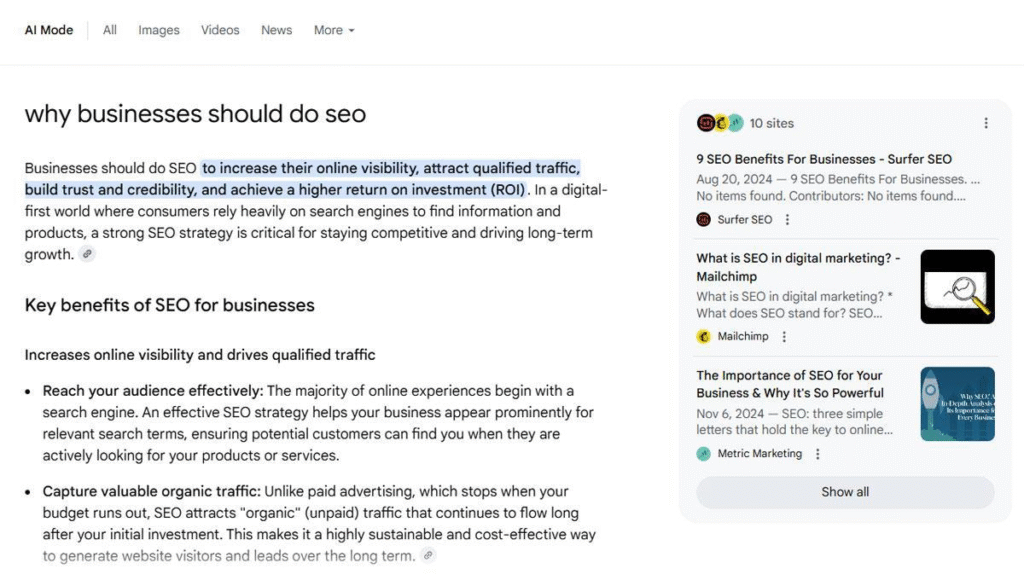
Search engines have transformed from keyword matchers into AI-powered answer engines that understand context, intent, and user needs at unprecedented levels.
From Keywords to Context
Google’s AI now understands what you mean, not just what you type. When you search for “apple,” it knows from context whether you want fruit or iPhones.
This semantic understanding means cramming keywords into content no longer works – you need comprehensive topic coverage that demonstrates real expertise.
The shift happened through systems like RankBrain and BERT, but now we’re seeing true natural language understanding.
Search engines handle conversational queries, understand synonyms, and figure out what you’re looking for even when you can’t articulate it perfectly.
For businesses, this means creating content that genuinely answers questions and solves problems, not trying to game the system.
The Multi-Platform Search Ecosystem

Google isn’t the only search game anymore. The landscape has fragmented across multiple platforms:
This fragmentation requires optimizing for multiple platforms, each with different rules and user expectations. What works on Google might fail on TikTok, and ChatGPT requires entirely different optimization than traditional SEO.
User Behavior Transformation
People search differently now. Voice searches dominate mobile queries. Visual searches through Google Lens process billions of requests. Everyone expects instant, accurate answers without clicking through websites.
Queries have evolved from “weather NYC” to “Will I need an umbrella in Manhattan this afternoon?” This conversational approach requires rethinking content strategy, moving from keyword targeting to comprehensive topic coverage addressing natural language queries.
Voice Search Optimization
With 20% of people globally using voice search and smart speakers in 75% of households, optimizing for conversational queries is no longer optional.
Voice Search Statistics and Impact
Voice search has penetrated all demographics. Older users embrace it for accessibility, parents use it while multitasking, and kids grow up talking to devices naturally.
For local businesses, the impact is massive – 58% of voice searches seek local information, and these searchers are ready to act immediately.
When someone asks “Where’s the nearest coffee shop?” They’re standing on the street ready to buy.
Businesses not optimized for voice-driven local searches are invisible to customers actively looking for them.
Conversational Content Strategy
Voice queries average 29 words versus 3-4 for typed searches. People say “What’s the best pizza place that delivers in Brooklyn until midnight?” not “pizza delivery Brooklyn.” Success requires:
Technical Voice SEO Implementation
Speakable schema markup tells search engines which content works for voice responses. Structure content with clear headings matching voice queries, then provide 40-60 word answers immediately after.
This length hits the sweet spot for featured snippets that voice assistants read.
Page speed becomes critical and voice users expect immediate answers. Pages loading over 2.5 seconds get skipped for faster alternatives.
Companies like SynOpt Digital help businesses optimize these technical elements alongside content strategy for comprehensive voice search visibility.
Mobile-First Indexing and Core Web Vitals
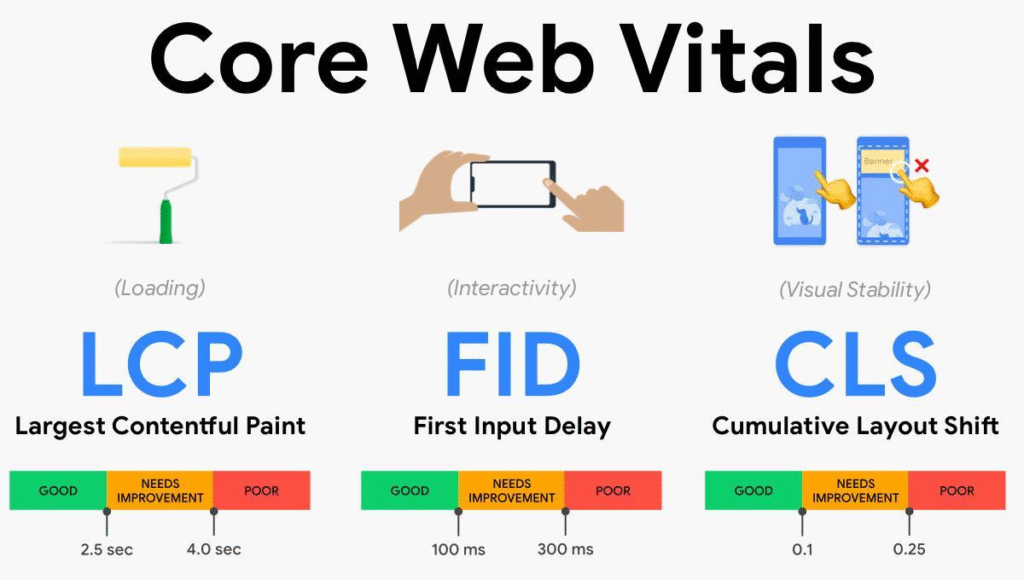
Google exclusively uses mobile versions for indexing. Your mobile site IS your site. Combined with Core Web Vitals as ranking factors, mobile performance directly determines search visibility.
Mobile-First Indexing Requirements
If content exists on desktop but not mobile, Google doesn’t see it. Period. Sites without proper mobile versions face dramatic ranking drops or complete removal from search results. There’s no workaround – you need complete mobile optimization or you become invisible.
This includes ensuring all content, images, structured data, and internal links work perfectly on mobile. Robots.txt must not block mobile resources. JavaScript must render properly across devices.
Core Web Vitals Optimization
These three metrics determine your search visibility:
Google’s Core Web Vitals documentation confirms these aren’t guidelines – they’re ranking factors. Poor scores mean lower rankings and lost revenue.
Mobile User Experience Factors
Beyond metrics, mobile UX covers everything about phone interactions. Buttons need 48×48 pixel minimum size. Text must be readable without zooming. Forms should be thumb-friendly. Mobile users have less patience – they need shorter paragraphs, clearer navigation, and faster conversion paths than desktop users.
Role of AI in Search Algorithms
AI has revolutionized how search engines understand and rank content, moving far beyond simple keyword matching to genuine comprehension.
Understanding AI-Powered Ranking
Modern AI evaluates content like humans do. It tracks user interactions – if people quickly leave your page, that’s negative. If they stay, read, and engage, that’s positive. These signals teach the algorithm what makes content valuable.
AI personalizes results individually. Your search history, location, even time of day influences results. The same search shows different results for different people, creating opportunities for targeted content matching specific audience needs.
Optimizing for AI Algorithms
Success with AI requires:
Write naturally while maintaining clear structure. AI recognizes forced, manipulative content. Focus on genuinely helping users – the AI will recognize and reward authenticity.
Predictive Search and Personalization
AI predicts searches before they’re complete. Autocomplete isn’t random – it’s carefully predicted based on trends, history, and similar users. Understanding these predictions helps optimize for queries users haven’t typed yet.
Location deeply influences results. “Coffee” in Seattle shows artisan roasting content; in Miami, iced coffee recipes. Create diverse content addressing different contexts and user preferences to maximize visibility across personalized results.
Zero-Click Searches
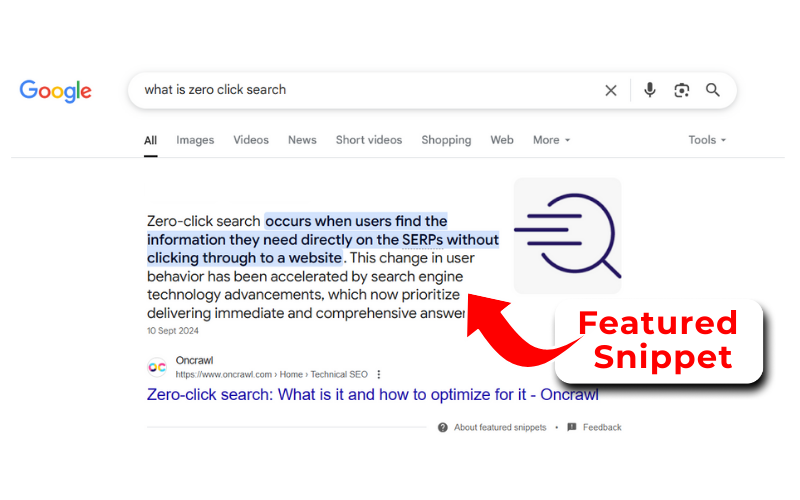
Over 50% of searches end without clicks. Google provides answers directly through featured snippets, knowledge panels, and AI Overviews.
This reality demands new strategies focused on visibility over traffic.
The Rise of Zero-Click Results
Zero-click features dominate mobile searches where quick answers matter most. While this reduces traditional traffic, it creates brand visibility opportunities.
When users repeatedly see your brand in featured snippets, you become the trusted authority even without clicks.
The key is appearing consistently in these features to build recognition that converts to long-term success.
Users who do click after seeing you in snippets are pre-qualified and more likely to convert.
Optimizing for Featured Snippets
Winning featured snippets requires specific strategies:
Research shows featured snippets increase CTR by 35% even from position one. Structure content with question-based headings followed immediately by concise answers for best results.
Brand Visibility Without Clicks
Stop measuring only traffic – track impressions, brand mentions, and visibility metrics. Local businesses especially benefit from zero-click optimization. Appearing in local packs with complete information drives both online and offline conversions without website clicks.
Knowledge panel management becomes crucial. Claim and verify your panel, ensure Wikipedia and Wikidata accuracy, and maintain consistent information everywhere. This often serves as users’ first brand impression.
Localization of SEO
Local SEO has evolved beyond directories into sophisticated AI-driven systems requiring comprehensive multi-platform optimization.
Google Business Profile Mastery
Your Google Business Profile drives more local visibility than any other factor. Complete optimization requires:
Hyperlocal Content Strategy
Target neighborhoods, not just cities. “Dentist in Lincoln Park” faces less competition than “Dentist in Chicago” while capturing higher-intent traffic.
Local SEO ranking factors show proximity and relevance matter more than ever. Create genuine local content showing real community connection, local event coverage, neighborhood guides, community involvement stories.
Each location page needs unique value, not template content with city names swapped. Include parking information, local landmarks, area-specific services, and testimonials from neighborhood customers.
Multi-Platform Local Presence
Optimize beyond Google. Apple Maps drives significant iOS traffic. Bing Places captures older demographics. Social platforms have become local discovery engines. Maintain consistency across platforms while leveraging platform-specific features like Apple Showcases and social location tags.
Voice assistants pull from all these sources, making comprehensive coverage essential. Agencies like SynOpt Digital specialize in managing this complex multi-platform presence, ensuring businesses appear regardless of how customers search.
Topical Authority
Search engines reward comprehensive subject expertise over individual keyword rankings. Building topical authority has become foundational for SEO success.
Content Cluster Strategy
Structure content as interconnected webs, not standalone pages. Create pillar content providing broad topic overviews, supported by detailed cluster pages exploring subtopics.
Strategic internal linking shows search engines relationships between ideas, signaling expertise beyond individual pages.
This approach demonstrates you’re not keyword chasing but building genuine expertise. Cover topics from every angle, answer related questions, and provide comprehensive resources that establish authority.
Demonstrating Expertise
E-E-A-T (Experience, Expertise, Authoritativeness, Trust) directly impacts rankings. Key strategies include:
Competitive Topical Analysis
Analyze competitor coverage to find gaps. Often the best opportunities aren’t competing for identical topics but finding underserved niches within your industry. Build comprehensive resource hubs becoming the go-to destination for specific topics.
Remember: topical authority takes time. Consistent content creation, regular updates, and patience as search engines recognize growing expertise eventually create an insurmountable competitive advantage.
AI Content Writing and Optimization Tools
AI tools have transformed content creation, but success requires balancing automation with human expertise.
AI Writing Tool Best Practices
ChatGPT, Claude, and similar tools excel at generating outlines, first drafts, and routine content. But they can’t replace human creativity or genuine expertise. The key is acceleration, not replacement.
Never publish raw AI content. Search engines detect generic AI writing, and users recognize inauthentic content. Use AI to overcome writer’s block, then add unique perspectives, real examples, and genuine insights that only human experience provides.
Content Optimization with AI
AI analyzes top-ranking content identifying patterns and opportunities in seconds versus hours manually. Benefits include:
Quality Control and Enhancement
Every AI-assisted piece needs human review. Fact-check rigorously – AI makes confident errors. Add personal experiences AI can’t provide. Ensure brand voice consistency. The winning formula combines AI efficiency with human judgment, creativity, and quality control.
Professional SEO services like SynOpt Digital understand this balance, using AI tools strategically while maintaining the human touch that builds genuine authority and trust.
AI Overviews Will Dominate the SERP
Google’s AI Overviews represent the biggest SERP change in a decade, appearing in 20% of searches and growing daily.
Understanding AI Overviews Impact
AI Overviews especially dominate informational queries in technology, business, health, and education. They often occupy entire above-the-fold space, pushing traditional results down. For affected industries, being included in AI summaries matters more than traditional rankings.
Impact varies by query type. Some sites see traffic decrease as users get instant answers. Others see qualified traffic increases, users clicking after reading AI Overviews show higher engagement and conversion rates.
Optimizing for AI Overview Inclusion
Getting included requires specific tactics:
Studies show structured content with clear answers is 3x more likely to appear in AI Overviews.
Adapting Strategy for AI-First SERPs
Focus on conversion quality over traffic quantity. Track brand mentions in AI features, not just rankings. Create complementary content providing detailed guides, tools, and resources users need after getting AI-generated summaries.
The key is providing value beyond what AI can summarize. While AI explains concepts, your content offers practical applications, downloadable resources, and interactive tools requiring site visits.
Your 2025 SEO Action Plan: Start Dominating Search Today
The path forward is clear but challenging. Many businesses struggle implementing these complex strategies while running daily operations. That’s where expert help becomes invaluable.
Our experts at SynOpt Digital have the expertise, tools, and ongoing support needed to navigate this evolving landscape successfully.
The age of SEO shortcuts has ended. The age of authentic, user-first optimization has begun. Whether you tackle these changes yourself or partner with experts, the time to act is now.
Every day you wait, competitors gain ground in building the authority and visibility that will dominate search for years to come.
Ready to transform your SEO strategy for 2025 and beyond? Contact us today to grow your online visibility.