
Search Engine Optimization Consulting Services: Resources, Tools, and Expert Insights
You know your website needs more traffic. You’ve heard about SEO. But figuring out where to start can feel overwhelming.
Search engine optimization consulting services help bridge that gap. A good consultant looks at your site, finds what’s broken, and builds a plan to fix it. This guide walks you through what these services include, the tools consultants use, and how to choose the right help.
Whether you’re a small business owner or a marketing manager, you’ll walk away with a clear picture. Let’s dig in.
What Are Search Engine Optimization Consulting Services?

SEO consulting is expert guidance for your website’s search performance. A consultant reviews your site and tells you what to change. They create a roadmap so your pages rank higher on Google.
This is different from hiring a full SEO team. A consultant advises and guides. Your team (or theirs) does the hands-on work.
Here’s what most SEO consulting services cover:
- Site audits — Finding technical problems that hurt rankings
- Keyword research — Picking the right words your audience searches for
- Content strategy — Planning what to write and when
- Link building advice — Getting other sites to link back to yours
- Local SEO — Showing up in map results and local searches
- Performance tracking — Measuring what’s working and what’s not
The goal is simple. Get more of the right people to find your website.
Why SEO Consulting Is Trending Upward
Interest in SEO consulting is growing fast. According to Statista’s 2024 advertising data, global search ad spending topped $300 billion. Businesses want organic traffic too, not just paid clicks.
Google’s algorithm updates keep getting smarter. AI-powered search features are changing how results look. Businesses need expert help to keep up with these shifts.
If you’re curious about how search is changing, check out our post on upcoming SEO trends shaping search in 2025. It covers the biggest changes ahead.
Key Areas an SEO Consultant Will Review
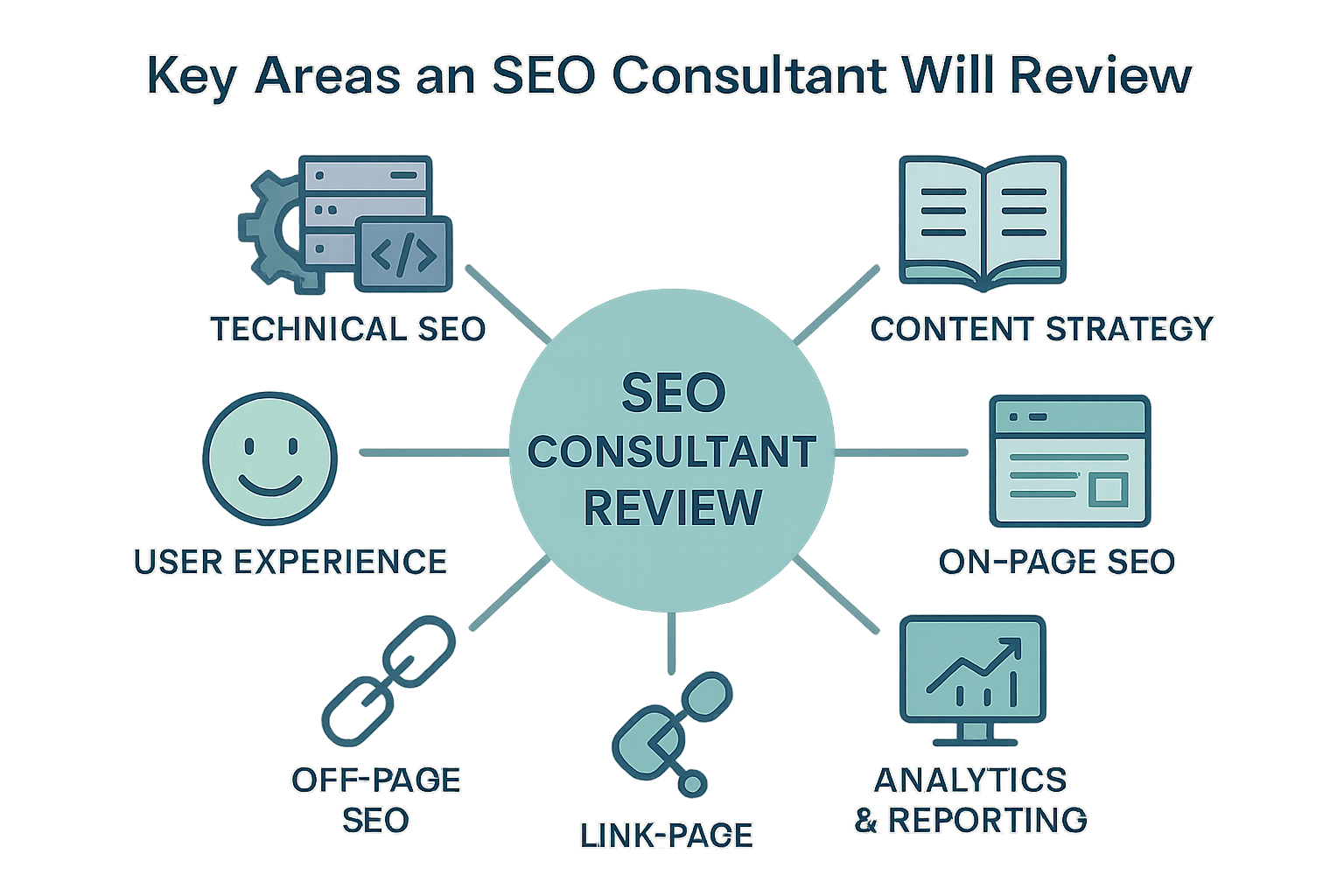
1. Technical SEO Health
This is the foundation. If your site loads slowly or has broken links, Google won’t rank it well. A consultant checks things like:
- Page speed on mobile and desktop
- Crawl errors and broken pages
- XML sitemap and robots.txt setup
- HTTPS security
- Core Web Vitals scores
Think of technical SEO like the plumbing in a house. Nobody sees it. But if it breaks, everything stops working.
Our small business SEO checklist covers many of these items in detail.
2. On-Page SEO
On-page SEO means improving what’s on each page. This includes title tags, headers, and meta descriptions. It also covers how you use keywords in your content.
A consultant will look at your top pages first. They’ll check if your headings match what people search for. They’ll also make sure your content answers the reader’s question clearly.
3. Content Gaps and Strategy
Most sites miss big keyword chances. A consultant finds topics your competitors rank for that you don’t. Then they build a content plan to fill those gaps.
Good content strategy isn’t about writing more. It’s about writing smarter. If you want a deeper dive, read our guide on how to develop a content strategy for 2025.
4. Off-Page SEO and Backlinks
Backlinks are links from other websites to yours. Google sees them as votes of trust. The more quality links you have, the higher you rank.
A consultant will review your backlink profile. They’ll spot toxic links that hurt your site. They’ll also suggest ways to earn new, high-quality links.
5. Local SEO
If you serve a local area, this matters a lot. A consultant will check your Google Business Profile. They’ll make sure your name, address, and phone number are the same everywhere online.
Local SEO also includes getting reviews and building local citations. These small steps make a big difference for nearby customers searching for you.
Tools That SEO Consultants Use
Good consultants rely on proven tools. Here are the most common ones:
- Google Search Console — Free tool from Google that shows how your site performs in search
- Google Analytics 4 — Tracks who visits your site and what they do
- Ahrefs — Finds keywords, checks backlinks, and audits sites
- SEMrush — All-in-one tool for keyword research and competitor analysis
- Screaming Frog — Crawls your site to find technical issues fast
- Moz Pro — Tracks rankings and suggests on-page fixes
- Surfer SEO — Helps match your content to what Google wants to rank
You don’t need all of these. But a good consultant will use at least two or three. Ask them which tools they prefer and why.
How to Choose the Right SEO Consultant

Not all consultants are equal. Here’s what to look for:
Check Their Track Record
Ask for case studies or past results. Good consultants can show real numbers. Look for traffic growth, ranking gains, or revenue increases.
Ask About Their Process
A strong consultant has a clear process. They should explain how they audit, plan, and report. Avoid anyone who promises page-one rankings overnight.
Look for Clear Communication
SEO can get technical. Your consultant should explain things in plain language. If they can’t make it simple, that’s a red flag.
Understand the Pricing
SEO consulting pricing varies widely. Here are common models:
- Hourly rates — Usually $100 to $300 per hour
- Monthly retainers — Often $1,000 to $5,000 per month
- Project-based — One-time audits or plans, $2,000 to $10,000+
Cheaper isn’t always better. Focus on value and results, not just cost.
SEO Consulting vs. DIY SEO vs. Paid Ads
You might wonder if you even need a consultant. Here’s a quick comparison:
- DIY SEO — Great if you have time to learn. Slow results. Free or low cost.
- SEO consulting — Best for businesses that want expert direction. Faster, smarter results.
- Paid ads (PPC) — Instant traffic but stops when you stop paying.
Many businesses use both SEO and PPC together. Our comparison of PPC vs. SEO can help you decide what fits your budget.
What to Expect From Your First Consulting Engagement
Here’s a typical timeline for new SEO consulting work:
- Week 1-2: Full site audit and competitor review
- Week 3: Keyword research and content gap analysis
- Week 4: Strategy presentation and action plan
- Month 2-3: Start making changes based on the plan
- Month 4-6: Track results and adjust the approach
SEO takes time. Most businesses see real results in three to six months. A good consultant sets honest expectations from day one.
Red Flags to Watch For
Stay away from consultants who:
- Promise guaranteed #1 rankings
- Won’t share their methods
- Use shady link-building tricks
- Don’t provide regular reports
- Lock you into long contracts with no results
Google’s own guide on hiring an SEO warns about these same issues. It’s a great free resource worth reading.
Measuring the ROI of SEO Consulting
How do you know if consulting is worth it? Track these numbers:
- Organic traffic — Are more people finding you through search?
- Keyword rankings — Are you moving up for target terms?
- Leads or sales — Is search traffic turning into revenue?
- Bounce rate — Are visitors staying on your site?
According to Search Engine Journal’s 2024 SEO statistics, organic search drives over 53% of all website traffic. That’s a huge opportunity.
Frequently Asked Questions
What do search engine optimization consulting services include?
They usually include a site audit, keyword research, content planning, and link-building advice. Some consultants also cover local SEO and technical fixes. The exact scope depends on your needs and budget.
How much does SEO consulting cost?
Prices range from $100 to $300 per hour. Monthly retainers run $1,000 to $5,000. Project-based work can cost $2,000 to $10,000 or more. It depends on your site size and goals.
How long does it take to see results from SEO?
Most businesses see changes in three to six months. Some quick wins happen sooner. SEO is a long-term strategy, not a quick fix.
Can I do SEO myself instead of hiring a consultant?
Yes, if you have time to learn and do the work. A consultant speeds things up and helps you avoid costly mistakes. Many business owners start with DIY and then bring in help.
What’s the difference between an SEO consultant and an SEO agency?
A consultant advises and creates the strategy. An agency usually does the work too. Some consultants also offer hands-on help. Ask about their scope before you commit.
How do I know if my SEO consultant is doing a good job?
Look at your organic traffic, keyword rankings, and leads. A good consultant shares monthly reports. You should see steady progress over time.
Is SEO consulting worth it for small businesses?
Yes. Small businesses often benefit the most. Local SEO alone can bring in steady leads. Even a one-time audit can uncover quick wins that boost traffic fast.
Wrapping Up: Your Next Steps
Search engine optimization consulting services can change how your business shows up online. The right consultant finds what’s holding your site back. Then they give you a clear plan to fix it.
Start by checking your own site with free tools like Google Search Console. Write down your top goals and biggest questions. This prep work makes your first consulting call much more productive.
If you want to keep learning, explore our blog for more guides on SEO, content, and digital marketing. And if you ever need a hand, don’t hesitate to reach out for guidance.